
Fix the catalog before you buy AI for your webshop

A guest post from Bluemint, a Hello Retail partner that builds and runs ecommerce platforms across the Nordics.
Search, recommendations, chatbots and product emails all read the same product data. When that data is inconsistent, every one of those tools does a worse job, whichever model sits on top.
More and more briefs we get start with AI. Usually a webshop wants a chatbot, better search or product texts written by a model, and usually the budget is already set aside.
“We want AI” isn’t really a brief. We ask what the AI should actually do, in terms we can measure afterwards: “Halve the manual catalog work.” “Let customers find the right spare part without calling support.” Then we look at what’s actually happening in the store. The first fix is usually better product data, a cleaner workflow or a small change in the platform, and AI sometimes comes after that.
This post is about product data, because that’s often where the real work starts.
Search, recommendations and email all read the same data
A search engine, a recommendation engine, a support chatbot and an agent that picks products for your emails are usually bought as four separate projects. All four read the same catalog: Titles, attributes, categories, stock and prices.
So they struggle in the same places. A recommendation engine can’t suggest a matching accessory if nothing in the data connects the two products. Search has a hard time with “waterproof jacket for kids” when waterproofing is an attribute on some products and a line in the description on others. And an email agent picking products for a subscriber can’t know that “Blå”, “blue” and “navy” are the same color if three suppliers spelled it three ways.
A better model can work around some of this. Cleaning the data fixes it for all four tools at once.
What we find when we audit a catalog
Catalogs rarely become messy overnight. The problems build up over years of supplier imports, redesigns and quick fixes, and these are the problems we see most often:
The same attribute under several names
One supplier sends “Color”, another “Farge”, a third puts it in the product title. On the product page nobody notices. For search and filters, they’re three different fields.
Fit and compatibility only support knows
In spare parts, tools and technical gear, customers need to know whether a part fits their model and year. If that knowledge lives in the support team’s heads, no search engine or model can use it.
Categories built around the menu
Products end up wherever they fit in the navigation at the time. After a few redesigns some sit in five categories and some in none.
Attributes hidden in descriptions
Size, material and use case written as running text. Fine for someone reading the page, hard for filters and recommendations to use.
Nobody owns the data after launch
The catalog was set up as part of the launch project. When the project ended, nobody got the job of keeping it clean.
You rarely see these problems in a demo. You see them in production, as searches that return the wrong part and support tickets that shouldn’t have been needed.
Boatparts: Structure first, AI after
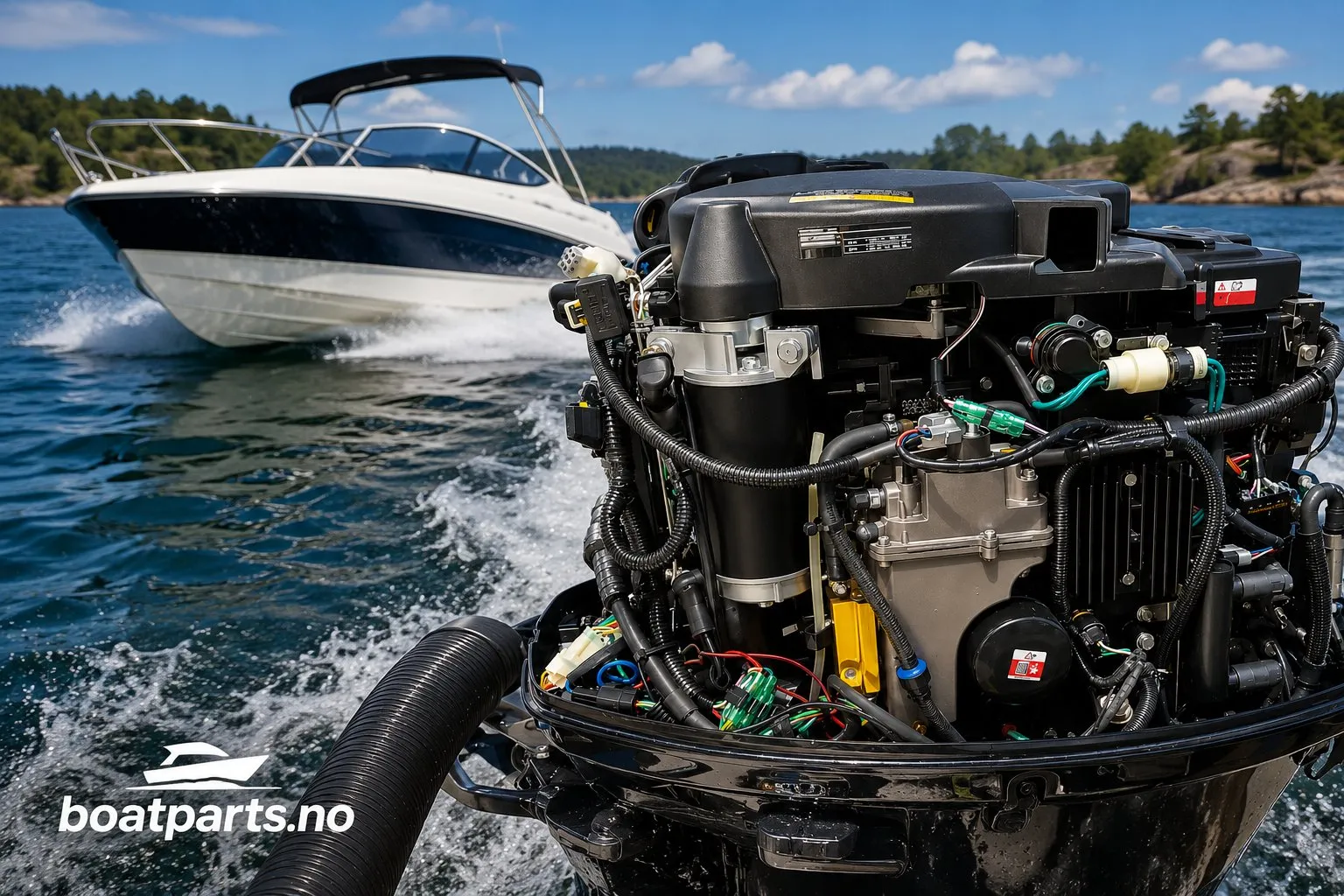
Boatparts sells aftermarket and spare parts for boats across the Nordics. The catalog is large, and getting compatibility right matters. A customer looking for a fuel pump needs exactly the right pump for one motor, one year and one model. The previous store didn’t rank results, the catalog data was inconsistent, and the store wasn’t converting as well as it could.
We started with the data. We cleaned and normalized the catalog so attributes mapped the same way across suppliers, and added more structured product data and fit guides. Then we built a search experience made for spare parts. AI came in after that, to make product search more natural and take load off the support team, and we’ve kept optimizing the store and checkout since.
Sales volume grew 126% during our work on the store, with healthier margins from the ongoing conversion work.
Customers can navigate the catalog more easily, search does a better job of finding the right SKU, and the team spends less time on technical problems.
Where AI helps with the catalog itself
One area where we’ve found AI genuinely useful is catalog cleanup. On one project we used a model to sort long product codes into structured categories, and taxonomy work that used to take weeks by hand now takes hours.
Rules and a review step are built into that flow. The model suggests a category, a person who knows the products checks it, and the approved result goes back into the catalog.
That pattern works well for us: Give the model a clearly defined task, have someone who knows the products review the output, and the client’s data stays in their own systems. We don’t send catalog or customer data to model providers without explicit permission.
Before you start an AI project
If several of these are difficult to answer, that’s probably where part of the budget should go first.
- Can you filter your whole catalog on the attributes customers ask about? Size, color, material, compatibility: In other words, the attributes your customers actually use to decide.
- Does each attribute have one name and one set of values? Across every supplier and every import.
- Does every product sit in at least one category that describes what it is? Where it shows up in the menu doesn’t count.
- Is someone responsible for product data after launch? A named person or team, with time set aside for it.
- Can you describe what the AI should do in one sentence you can measure? “Fewer support calls about fit”, “less manual categorization”, “more revenue per email”. If you can’t, it’s worth defining that before choosing the technology.
The launch is only the beginning
A store keeps changing after it goes live – new suppliers, new ranges, new seasons. The product data changes with it, and a catalog that was clean at launch drifts if nobody looks after it. We’d rather set up that routine with a client from the start than clean up after the next replatforming.
So if AI is on your roadmap, it’s worth looking at the catalog first. The quality of that data will have a lot to say about what the AI can actually do.
Bluemint builds and runs Magento, Adobe Commerce and headless ecommerce platforms, and the integrations and applied AI around them, from offices in Tranås, Stavanger and Vilnius. Read more at bluemint.se.
From Hello Retail: Product Intelligence
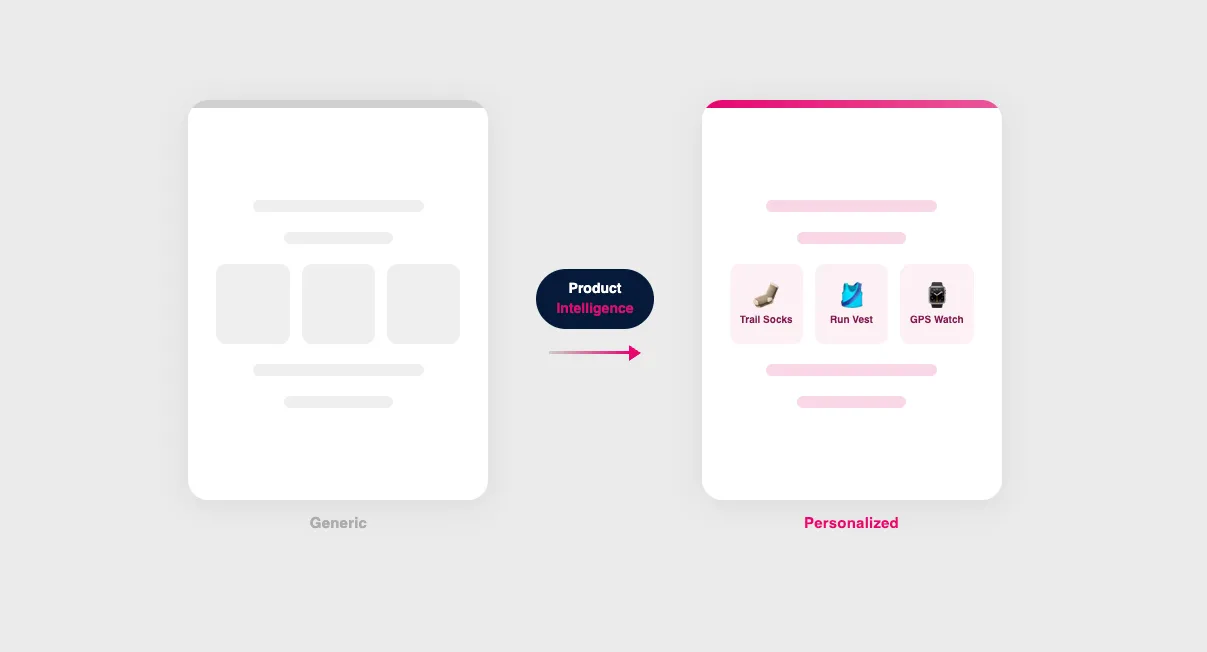
Product Intelligence is the AI engine behind Hello Retail’s Search, Recommendations and Product Agents. It enriches your catalog with attributes it derives from product images and descriptions, and it learns how products relate to each other from purchase patterns across more than 250 million products. When your own data is thin, for a new product or a new store, it draws on patterns the network has already learned.
Keep reading
 Industry Tips
Improve Klaviyo emails with data
Your Klaviyo flows are solid. But if every abandoned cart email shows the same generic recommendations, you're leaving revenue on the table.
 Industry Tips
When developer-first search becomes a bottleneck
API-first search gave your developers full control. But now your merchandisers file tickets for every boost rule, and your recommendation logic lives in custom code. Here's when search infrastructure stops being an advantage.