
A shoe comes back: Monica Trabjerg Balle on recommerce as a revenue channel

Most brands treat recommerce as a sustainability statement. Monica Trabjerg Balle treats it as a revenue channel.
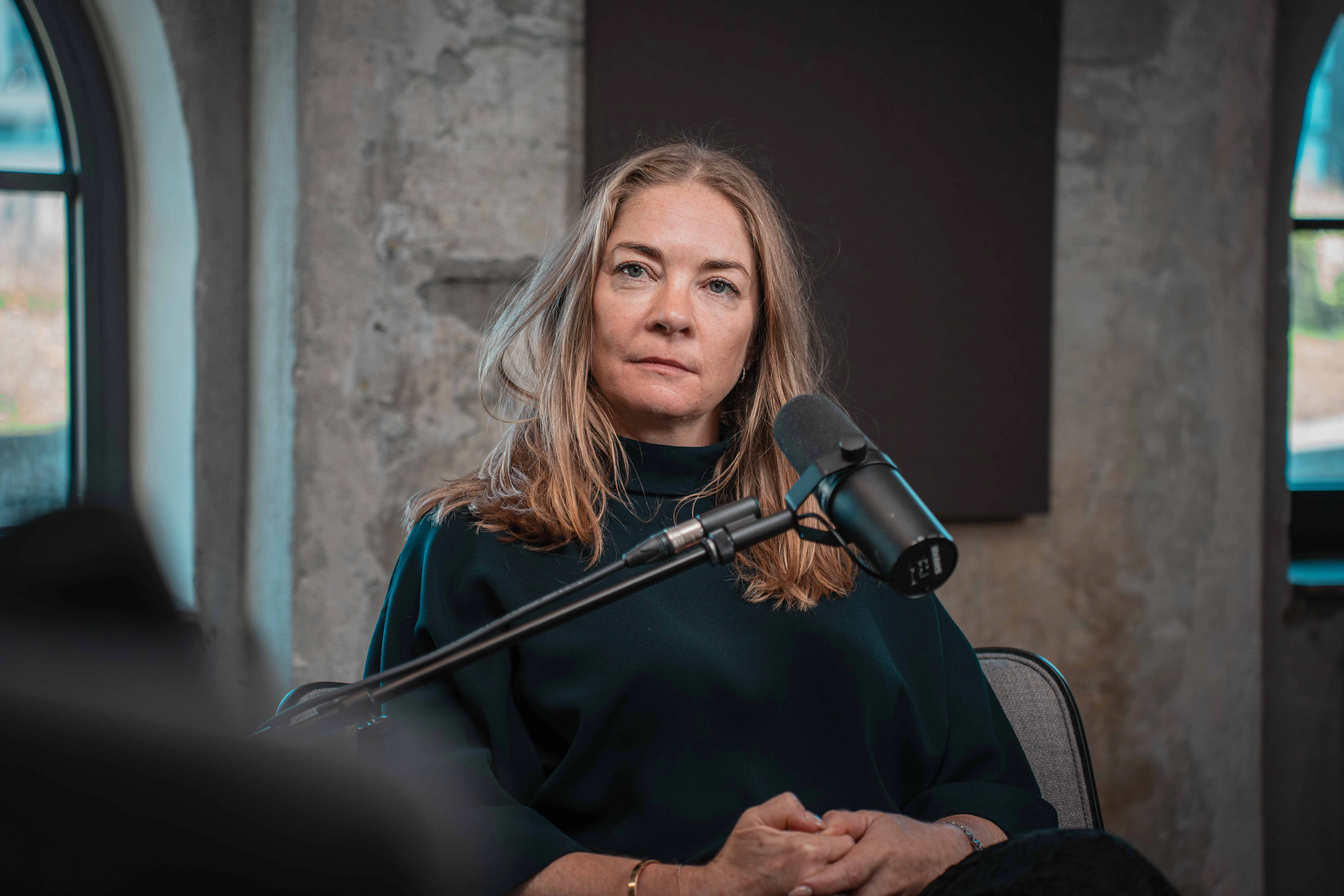
Monica Trabjerg Balle was Head of ecommerce at Roccamore, a Copenhagen brand making handmade shoes, when the idea of a take-back program came onto her radar. The question she brought to it was a commercial one: would offering a trade-in on used shoes cannibalize new sales, or would it open something different? She launched the program and watched the numbers come back. As Chief Commercial Officer at Create2Stay, she went on to build circular commerce infrastructure for over 30 brands across Denmark and Europe. She joined us as part of our Hello Retail Conversations series, where we talk to people shaping how ecommerce works.
Watch the full conversation with Monica here →
What happens when a shoe comes back
The Roccamore case is worth walking through in operational detail, because the ambition of the model is in those details.
A customer wants to trade in a pair of shoes. They log into the Roccamore website, find their original order, and see the reward available for the specific pair: a discount voucher or loyalty points redeemable against a future purchase. They accept, receive a prepaid QR code, and drop the shoes at a local GLS pickup point. The package goes to what reads as a Roccamore address. The confirmation email comes from Roccamore. The customer has no indication they are dealing with anyone other than the brand.
The shoes arrive at Create2Stay’s warehouse. The team opens the box, grades the item, has it cleaned through a professional cleaning company, repairs anything that needs it, and photographs the specific pair. The product gets a new SKU derived from the original product metadata in Shopify, so it can be listed with the product’s existing images and descriptions alongside the new condition. Pricing is set by the brand, typically around 60% of the new price. The item goes live in a dedicated Roccamore collection.
A buyer then purchases the shoes and receives them in Roccamore-branded packaging: tissue paper, postcards, stickers. They ordered from Roccamore. They receive from Roccamore.
“You get a firsthand experience from buying a secondhand item. And we are very careful about that.”
Monica Trabjerg Balle
What the buyer gets
The question Monica answers clearly is why someone would buy secondhand from a brand rather than from Vinted or a Facebook group.
The first reason is authenticity. Items sold back through the brand are vetted by the brand. There are no fakes. Every item has been cleaned, graded, and photographed. If there is a scratch or scuff, it is documented. The buyer sees exactly what they are getting before it ships.
The second is the transaction itself. Selling through a peer-to-peer platform means messages, photographs, measurements, and uncertainty. Selling back to the brand means logging into a familiar system and getting an offer. The hassle disappears on both sides.
The third is FOMO. Roccamore operates in limited editions. Many items are produced once. A secondhand listing for a discontinued pair is a single-SKU item: when it is gone, it is gone. That scarcity connects directly to email marketing.
“The whole thing about integrating it into your Klaviyo email marketing is a super cool tool, because if you have a browsed or abandoned basket, it really makes sense to do a formal communication, as this is a single-SKU item.”
Monica Trabjerg Balle
And there is a practical upside on returns. The standard Danish consumer rights framework still applies to a brand-sold secondhand item. You get 14 days to return. You do not get that on Vinted.
The numbers that changed the frame
When the Roccamore program had been running long enough to read, the figure that Monica describes as decisive came back:
“We saw that 42 percent of all secondhand items was bought by new customers. So that’s customers that had not bought by the brand before.”
Monica Trabjerg Balle
That is new customer acquisition at a cost structure that does not include paid advertising. The person who comes in through a secondhand listing already wanted the brand. They found the specific item, sought it out, and bought it.
Return rates tell a similar story. Secondhand items at Roccamore return at roughly half the rate of new products. Monica’s read is direct: a buyer who goes to the effort of finding a specific secondhand pair is not browsing casually.
“It’s a really loyal customer that you get because it’s a person who really want this brand. So they may be already brand ambassadors from the first order because they buy secondhand.”
Monica Trabjerg Balle
Across Create2Stay’s brands, the average share of new customers on recommerce is 53%. Not every brand lands at 42%. But none of the programs are predominantly repeat buyers.
The wholesale brand problem
The new customer acquisition angle has a different dimension for brands that do not sell direct to consumers.
A brand selling exclusively through Boozt or Zalando has no first-party relationship with its end customers. The buyer’s email, purchase history, and consent all sit with the platform, not the brand. That is a structural problem for any direct marketing program.
A take-back program changes the equation. Customers who want to trade in an item they originally bought anywhere, whether at Boozt or as a gift, come to the brand’s own platform to do it. They log in, give their email, and accept communications. The brand gets the relationship it never previously had.
“You also get the wholesale customers directly into your own platform and you get the data, email, and permissions on those customers.”
Monica Trabjerg Balle
The recommerce channel becomes the first direct interaction many wholesale brands have with their own end customers.
Who this works for

The assumption that recommerce is primarily a women’s fashion category does not survive the Create2Stay portfolio.
Outdoor gear, hunting equipment, cycling products: these are categories where secondhand makes commercial sense and where the male buyer is increasingly active. The logic is straightforward. Hunting equipment is expensive. Moving from beginner kit to more serious gear as you advance creates a natural secondary market. The same buyer who wants to upgrade also wants a fair return on what they are leaving behind.
What Monica describes as critical for any brand entering recommerce is not the product category. It is where the commitment sits internally.
“It has to be the management of the company that really wants to do this. Because if it’s not really a part of the strategy, and it’s not really thought into in all aspects of the company, then they don’t succeed as well. So if the CEO loves this, then it’s a good idea.”
Monica Trabjerg Balle
The programs that underperform are the ones that start as a single person’s project and never get built into the wider business. The programs that generate strong acquisition and revenue numbers have C-level ownership from the start.
The greenwashing question
H&M’s recommerce program drew significant public criticism. Monica’s direct experience across 30+ brands does not match that pattern.
The brands working with Create2Stay are not positioning recommerce primarily as a sustainability play. They are doing it because it generates revenue, acquires customers, and extends the useful life of products that would otherwise be discarded or sit unworn. The environmental benefit is real.
“I would not call that greenwashing because it makes sense. The clothing works. It gets a longer life and we can see that the customers buying the secondhand is happy. The customer trading in the items are happy. So yeah, everybody is happy.”
Monica Trabjerg Balle
There is also a repair dimension to the model. Create2Stay recently launched a repair service working with professional tailors in Denmark and across Europe. A button that comes off or a stitch that comes loose is enough for many consumers to discard an item rather than fix it. The repair service intervenes before that happens.
The brand Elsk, which sells clothing with a surfer-influenced aesthetic, takes this further: textile items that cannot be resold are passed to artists who use them as raw material for textile paintings depicting landscapes from northern Jutland.
What good looks like
The Green Cotton Group is the example Monica returns to as the most fully realized implementation.
The company manufactures organic cotton clothing, primarily for babies and young children. They have integrated recommerce and repair directly into their product passports. Every garment has a QR code in the care label, with the instruction: “Don’t cut me, I have value.” Scanning that code brings up the product’s full history alongside options to sell it back to the brand or request a repair.

The children’s category makes the economics obvious. A baby goes through approximately seven clothing sizes in the first year of life. Almost nothing wears out. The case for a circular model that lets parents sell back and buy back is self-evident, and the loyalty numbers from the Green Cotton Group program reflect that.
“They do a product passport. So you scan a QR code in the care label of your baby’s pants and within, it actually also says, don’t cut me, I have value, which is pretty cute.”
Monica Trabjerg Balle
What the product passport does is make the recommerce action available at the moment the customer is already thinking about the garment. Not as a separate campaign. At the natural point of departure.
What Hello Retail brings to this
The data layer Monica describes is where Hello Retail’s Product Intelligence and Product Agents connect directly.
The single-SKU nature of secondhand items creates both an opportunity and a constraint. An item viewed but not purchased disappears permanently when it sells or is unlisted. That means the window to act on expressed intent is shorter than it is for standard new inventory.
Product Agents is built precisely for this signal. A customer who viewed a specific secondhand Roccamore pair and left without buying has a purchase intent that decays quickly. A triggered message timed to that item, or a recommendation for the closest alternative from the new collection when the item sells, turns expressed intent into a conversation the shopper actually wants.
Product Intelligence builds the behavioral map across the full catalog: what sells alongside what, how buyers move between the secondhand and new collections, where they enter and what they return for. That map is what keeps recommendations across the mixed catalog accurate rather than mechanical.
As brands move toward the fully integrated experience Monica describes, where secondhand and new inventory appear together in search results and category pages, the intelligence layer becomes essential. It is what keeps the experience coherent across both collections without requiring manual curation at scale.
Final thought
Monica’s closing advice to heads of ecommerce considering recommerce is not to start with sustainability. Start with the business question.
What is the KPI? New customer acquisition, lower returns, first-party data from wholesale customers, footfall in physical stores? The program should be designed to hit a specific commercial target, because the programs that are vague about their commercial objectives are the ones that get deprioritized when the next quarter looks difficult.
“You should look at what business model would fit you. Are you doing this because you want to make a change? Are you doing it because you want new customers? Can you build this into your physical stores as well? You have to have a strategy for where you want to go.”
Monica Trabjerg Balle
BCG data cited in the conversation places recommerce growing three to four times faster than new fashion. The question for most brands is not whether the market exists. It is whether they want to own it inside their own platform or leave it to someone else.
Monica Trabjerg Balle
Former CCO · Create2Stay
Monica Trabjerg Balle was Chief Commercial Officer at Create2Stay, a Scandinavian platform that builds recommerce solutions for fashion and lifestyle brands. Before Create2Stay, she was Head of ecommerce at Roccamore, where she launched one of Denmark's first brand-owned take-back programs. She built circular commerce infrastructure for 30+ brands across Denmark and Europe.
Watch the full conversation with Monica Trabjerg Balle on the Hello Retail Conversations page →
Keep watching
 Conversations
Future-proof your business: Jennifer Montague on positioning as ecommerce's only durable advantage
Jennifer Montague spent a decade in Copenhagen's B2B startup scene. In this conversation, she argues that ecommerce brands focused on traffic and features are maximally exposed to Temu, AI search shifts, and the next disruption. Positioning is the durable edge.
 Conversations
The importance of company DNA
Morten Grabowski Kjær, co-founder of Luksusbaby, on building with restraint, staying open when your customers are online, and why the hardest part of scaling isn't the systems.
