
Ecommerce email marketing statistics: 18 numbers that show triggered beats batch
Ecommerce email statistics: The numbers behind triggered email revenue
Email is the highest-return channel most ecommerce teams own outright, yet most of that return hides in a small slice of sends. The benchmark data is consistent on where the money sits: behavior-triggered emails, the ones that fire on a shopper’s own actions, convert and earn many times more per send than the scheduled newsletter blast.
The ecommerce email marketing statistics in this guide make the pattern concrete. They cover how much email is sent, what triggered automation is worth against batch campaigns, what poor email costs you, and where AI is changing the channel.
TL;DR: Automated ecommerce emails convert at 1.49% versus 0.08% for batch campaigns and earn 22 times more per send (Omnisend, 2025). Email still returns up to $36 for every $1 spent (Litmus). The biggest gains come from sending the right triggered message at the right moment, with timing and relevance doing more work than send volume.
How many people use email in 2026?
Email reach keeps growing even as newer channels crowd in. Around 4.6 billion people use email worldwide in 2025, more than half the planet, according to Statista, and that base is forecast to pass 4.85 billion by 2027.
For ecommerce, the reason email still matters is return on spend. Email drives up to $36 in revenue for every $1 spent at the top of the measured range, higher than any other channel (Litmus). That headline figure sits at the top of a band that runs from roughly 10:1 to 36:1 depending on program maturity, so it is a ceiling to aim at rather than a guarantee.
Part of that return comes from a structural advantage: email is owned reach. A social post or a paid ad reaches your audience only through a platform’s algorithm and ad auction, both of which can change overnight and both of which charge for access to people you already converted once. An email list is a direct line to those same people with no gatekeeper in between. For an ecommerce store, that means the highest-intent audience you have, your existing and lapsed buyers, is reachable at near-zero marginal cost.
For a store owner, it comes down to this. Email is a large, owned audience with the best measured return in the marketing mix, which makes how you use it the question that matters most.
Do triggered emails convert better than batch campaigns?
This is the statistic that should reshape most email programs.
Across more than 20 billion campaign emails and 470 million automated sends from over 27,000 brands, automated emails converted at 1.49% while one-off campaign emails converted at 0.08% (Omnisend, 2025). That is roughly a 19 times gap in conversion rate from the same channel.
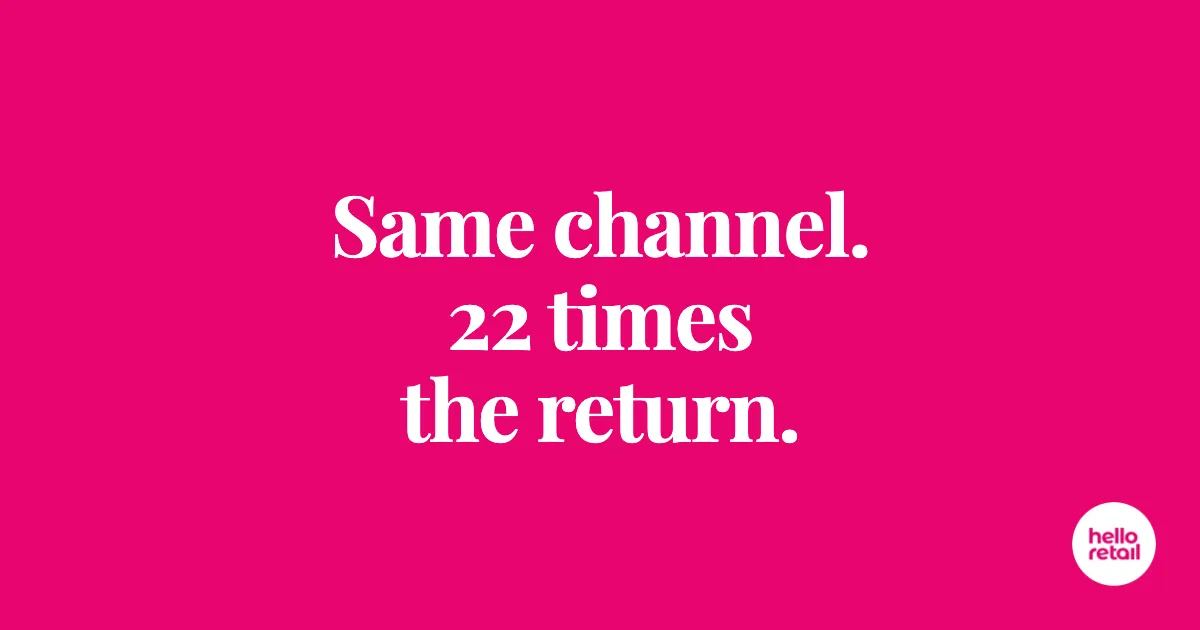
Revenue per send tells the same story. Automated emails earned $3.41 per email in 2025, against $0.155 for scheduled campaign emails (Omnisend, 2025), a 22 times difference. The reason is intent. A triggered email reaches a shopper in the moment they showed interest, where a batch campaign reaches everyone on the list whether they are in a buying mindset or not.
The gap holds within specific automation types, ranked by revenue per email (Omnisend, 2025):
- Back in stock emails: $9.14 per email and a 6.72% conversion rate, the highest performing automation measured.
- Welcome emails: $6.16 per email and a 2.11% conversion rate, capturing first-purchase intent.
- Abandoned cart emails: $3.59 per email and a 1.72% conversion rate, recovering sessions that would otherwise be lost.
Each of these is a behavior-driven message, sent because the shopper did something, not because the calendar said it was Tuesday. That is what separates a triggered program from a broadcast one.
The engagement numbers underneath the revenue point the same direction. The average campaign click-to-open rate sits at 2.44% (Omnisend, 2025), meaning that even among the minority who open a batch send, very few click through. Triggered messages clear that bar more easily because relevance is built in: the email is about the product the shopper just viewed, the cart they just left, or the item they asked to be notified about. Relevance is the variable that moves both conversion and revenue per send, and a behavior trigger is the cheapest way to guarantee it. A batch campaign has to guess what the whole list wants on a given day, and the data shows that guess is wrong most of the time.
What does bad email actually cost?
The cost of a weak email program is mostly invisible, paid in revenue that never arrives rather than money that leaves.
Cart abandonment is the clearest example. The average documented online shopping cart abandonment rate is 70.22%, calculated across 50 separate studies, with individual studies ranging from 55% to 84.27% (Baymard Institute). Roughly seven in ten carts are filled and then left behind.
A large share of that is recoverable, and triggered email is the mechanism that recovers it. An abandoned cart automation converting at 1.72% and earning $3.59 per email (Omnisend, 2025) is revenue pulled back from sessions a store had already lost. A store with no cart flow simply forfeits it.
There is a deliverability cost too, and it compounds. Push too hard with batch sends and unsubscribes and spam complaints climb, which lowers inbox placement for every future email. Industry campaign benchmarks put the average unsubscribe rate at 0.20% per send (Omnisend, 2025), a small number that adds up quickly when you blast a full list weekly. Average campaign open rates sit at 30.22% and click-through rates at 0.74% (Omnisend, 2025), so most batch sends are seen by under a third of recipients and clicked by well under one in a hundred.
The spiral runs like this. Low engagement on a send signals to mailbox providers that recipients do not want the mail, so the next send lands in spam for more people, which lowers engagement further, which worsens placement again. Over-sending a list to chase short-term revenue is the fastest way into that loop. Triggered email is the structural defense, because it sends fewer messages to more interested people, which keeps engagement high and inbox placement healthy. The cost of bad email is rarely a single bad campaign. It is the slow erosion of the asset itself.
How is AI changing ecommerce email?
The shift from rule-based automation to AI-assisted email is producing measurable gains, especially in the triggered messages that already perform best.
Adoption is well underway and broad. As far back as the 2023 State of Email Design report, 34% of marketers said they used AI to write email copy (Litmus, 2023), and adoption has climbed steeply since, with around half of companies now using AI somewhere in their marketing (WebFX, 2025). Copywriting was only the entry point. The higher-value uses are in targeting and timing: deciding who should receive a given trigger, what products to surface inside it, and when to send.
The bigger story is performance. Automated flows see 52% higher open rates than standard campaigns, and AI-driven flows show 332% higher click rates thanks to dynamic content and personalized recommendations (Omnisend, 2025). The lift is largest in flows rather than campaigns because that is where AI has the most signal to work with: a single shopper’s live behavior is a far richer input than a list-wide average.
The revenue effect follows. For Omnisend’s US clients, AI-powered email and SMS automation returned $79 in revenue for every $1 spent in 2025 (Omnisend, 2025), well above the cross-channel email average. The mechanism is that AI lets a triggered email decide what to show, to whom, and when, rather than sending the same block to everyone.
This is the direction Hello Retail Product Agents takes furthest, with agents that decide which behavior-driven sends to fire and what to put in them. The benchmark trend and the product posture point the same way: the value sits in personalized, autonomously-timed triggers.
Mobile vs desktop: Where do shoppers read email?
Reading behavior has moved decisively to the phone, and that changes how an ecommerce email has to be built.
The majority of email opens now happen on mobile devices, with desktop and webmail splitting the remainder (Litmus). The practical consequence is that subject lines, preview text, and the first screen of a triggered email have to work on a small screen first.
Engagement depth runs the other way. Desktop readers tend to show higher click-to-open rates than mobile readers (Litmus), meaning a shopper who opens on a laptop is more likely to act inside that open. The implication for ecommerce is a single-column, thumb-reachable layout with one clear call to action, designed so the mobile majority can act without pinching and zooming, while the desktop minority gets the deeper read.
Which email metrics should you measure?
The benchmarks above are industry-level reference points. What matters more is your own program against them. Five metrics give a complete picture of email health:
- Revenue per email, split by automated versus campaign. This is the single number that exposes whether your triggers are doing the work. The benchmark gap to beat is $3.41 against $0.155 (Omnisend, 2025).
- Conversion rate by message type. Track welcome, cart, and back-in-stock flows separately against the 2.11%, 1.72%, and 6.72% benchmarks (Omnisend, 2025), because an average hides which flow is underperforming.
- Open rate, measured against the 30.22% campaign average (Omnisend, 2025), with the caveat that open tracking has grown noisier and is best read as a trend rather than an absolute.
- Click-through rate, against the 0.74% campaign benchmark (Omnisend, 2025), as the cleaner read on whether the content earned the click.
- Unsubscribe and complaint rate, against the 0.20% benchmark (Omnisend, 2025), as the early-warning signal that send volume is outrunning relevance.
The pattern to watch for is the same one the channel-wide data shows: if your automated flows are not dramatically outperforming your campaigns, the triggers are where the upside is.
How Hello Retail approaches triggered email
Hello Retail builds for the side of the data that wins. Hello Retail Product Agents runs behavior-driven email as autonomous agents: each agent decides what to send, when to send it, and which products to feature for an individual shopper in real time, based on live behavior and product signals such as price changes and availability. Today that includes price-drop and replenishment agents, with a hard cap of one Product Agent email per recipient per day, so the cadence stays disciplined rather than constant.
Because email lives downstream of the on-site experience, the on-site signal feeds the send. As one internal data point on how tightly the two connect, about 6% of total revenue generated through Hello Retail Search is attributed to Initial Content, the personalized product selection shown the instant a shopper clicks the search bar (Hello Retail internal data, 2025). That is a Hello Retail figure from our own product reporting, not an industry benchmark, and it shows why the behavioral signal that powers good search also powers the triggers that follow.
Hello Retail Product Agents integrates with Klaviyo, triggering each send inside the email stack a store already runs and using its existing templates. The posture is to work with that stack and make the triggers inside it smarter, not to replace it.
The statistics point one way. Triggered, personalized, well-timed email earns many times more per send than the batch blast. If you want to see what that looks like on your own catalog, book a demo and we will walk through where the recoverable revenue sits.
Related reading
Keep reading
 Product Recommendations
Ecommerce personalization statistics: 30+ numbers on revenue, loyalty, and AI
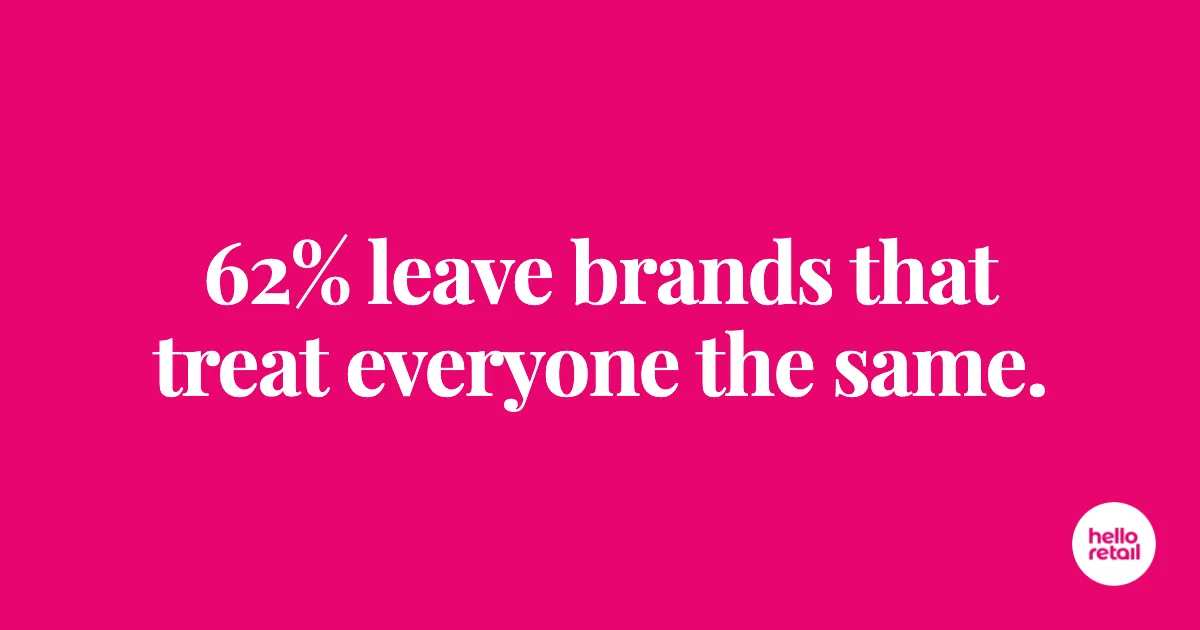
71% of consumers expect personalized interactions and 76% get frustrated when they don't happen (McKinsey). The verified dataset on what personalization does to revenue, loyalty, and AI adoption in 2026.
 Product Recommendations
Product recommendation statistics: 17 numbers on cross-sell, AOV, and conversion
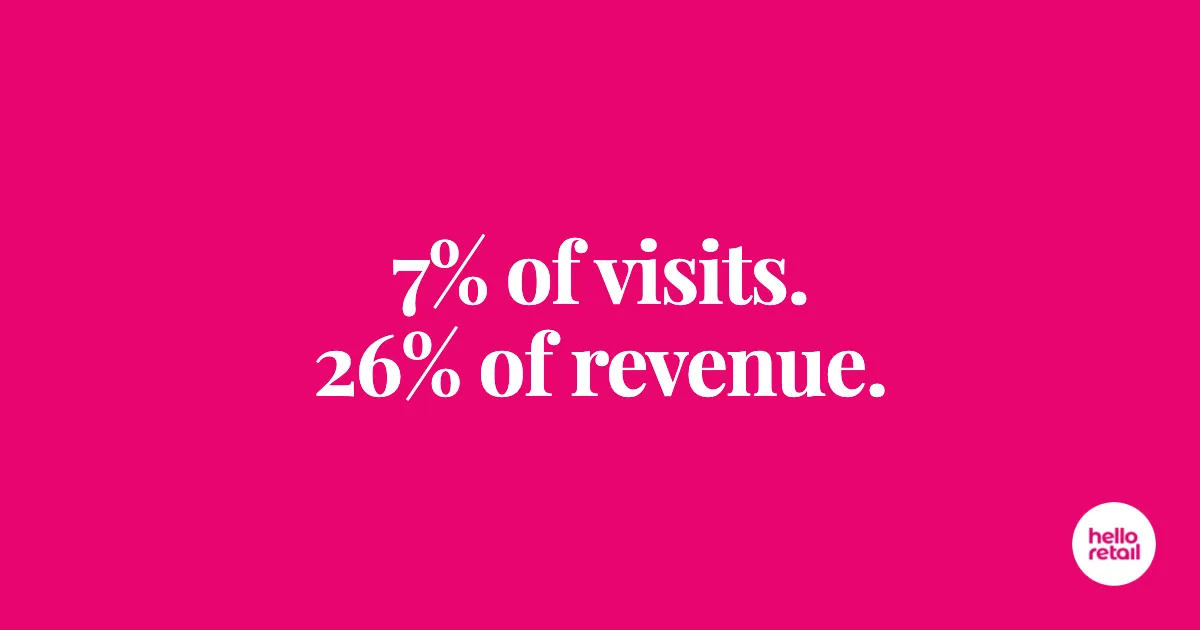
Shoppers who click a recommendation convert 4.6x more often and account for 26% of revenue from just 7% of visits (Salesforce). The full 2026 dataset on why recommendations drive ecommerce growth.