
Ecommerce personalization statistics: 30+ numbers on revenue, loyalty, and AI
Personalization is one of the few ecommerce investments where consumer expectation, revenue impact, and technology maturity all point the same way. Shoppers expect it, punish its absence, and reward the stores that do it well. The statistics below are collected from primary research by McKinsey, Boston Consulting Group, Twilio Segment, Epsilon, Accenture, and the Baymard Institute, with the publication year stated for every number so you can weigh recency yourself.
If you want the strategic foundation first, start with our complete ecommerce personalization guide; for what’s changing this year, see the 2026 personalization trends.
What consumers expect from personalization
The expectation numbers are the foundation for everything else, because they explain why generic experiences carry a cost even when nothing is visibly broken.
McKinsey’s Next in Personalization research (2021) put it plainly: 71% of consumers expect companies to deliver personalized interactions, and 76% get frustrated when it doesn’t happen. Personalization stopped being a delighter years ago; these figures describe a baseline expectation.
Epsilon’s consumer research (2018) found 90% of consumers find personalization appealing, and 80% say they are more likely to do business with a company that offers personalized experiences. The same study surfaced the number that matters most for lifetime value: consumers who find personalized experiences very appealing are ten times more likely to be among a brand’s most valuable customers, the segment expected to make more than 15 transactions a year.
Accenture’s Personalization Pulse Check (2018) measured both sides of the coin. On the positive side, 91% of consumers say they are more likely to shop with brands that recognize them, remember them, and provide relevant offers and recommendations. On the negative side, 48% of consumers have left a brand’s website and bought elsewhere because the experience was poorly curated. Nearly half of abandonment, attributed directly to weak curation.
What personalization does to revenue
McKinsey (2021) found that faster-growing companies drive 40% more of their revenue from personalization than their slower-growing counterparts. The causality runs both ways (good operators tend to do both), but the correlation between personalization maturity and growth rate has been replicated across studies for a decade.
Boston Consulting Group (2017) measured the direct effect: brands running personalization programs saw revenues increase by 6% to 10%, and grew two to three times faster than brands that did not. BCG also sized the prize at market level, estimating personalization would shift roughly $800 billion in revenue toward the 15% of companies in retail, healthcare, and financial services that get it right.
Business leaders see the same effect from the inside. In Twilio Segment’s State of Personalization 2022 (a survey of roughly 3,400 consumers and business leaders), nearly 80% of business leaders said consumers spend more when their experience is personalized, 34% more on average.
These are survey and program benchmarks, and they vary widely by vertical and starting point. Your own number comes from a holdout test, as covered in our personalization ROI measurement guide.
Loyalty and repurchase: Where personalization compounds
The revenue numbers above are single-purchase effects. The loyalty numbers are where personalization compounds.
Twilio Segment (2022) found that 49% of consumers say they will likely become a repeat buyer after a personalized shopping experience with a retailer. And 38% say they will shop again with a brand they’ve had a good experience with even when cheaper or more convenient options exist. Personalization, done well, buys insulation against price competition.
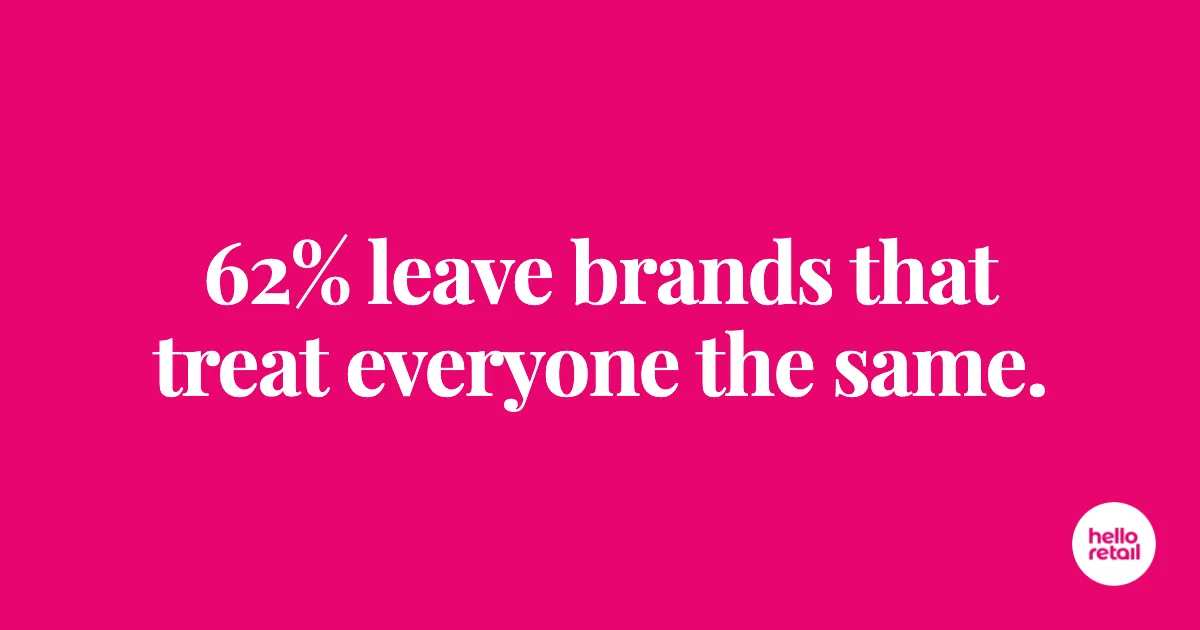
The penalty for generic experiences is growing fast. In the same survey, 62% of consumers said a brand will lose their loyalty if it delivers an un-personalized experience, up from 45% just one year earlier. That 17-point jump in a single year is the clearest signal in this whole dataset: tolerance for generic experiences is collapsing.
The execution gap: What businesses say versus what they do
The demand side is unambiguous. The supply side lags it badly, which is exactly where the opportunity sits for mid-market stores.
In Twilio Segment’s State of Personalization 2024 (a survey of 521 senior leaders at larger companies across 12 countries), 89% of business leaders said personalization is critical to their business’ success in the next three years. Near-unanimous conviction.
Execution tells another story. In the 2022 edition, less than half of companies (47%) personalized communications based on real-time customer behavior, only 35% felt they were successfully achieving omnichannel personalization (up from 24% in 2021), and 40% said getting accurate customer data for personalization is a challenge.
The gap between “89% say it’s critical” and “35% say they’re achieving it” is the practical takeaway: most of your competitors believe in personalization and have not operationalized it. Closing that gap earlier than they do is a real advantage, and it doesn’t require an enterprise data team. Our personalization guide walks through the four-stage roadmap.
AI and the shift to predictive personalization
The 2024 research shows AI moving from experiment to infrastructure in personalization programs.
From Twilio Segment’s State of Personalization 2024: 73% of brands agree AI adoption will fundamentally change personalization and marketing strategies, and 88% of companies are budgeting for or planning to adopt AI and machine learning tools within the next year. Adoption is no longer the question; 59% of decision-makers expected their teams to be using AI daily by 2025, with 91% saying at least weekly.
The direction of travel is predictive. 86% of business leaders expect a significant shift from reactive to predictive personalization across their industry: from responding to what a shopper just did toward anticipating what they will need next. Asked which AI technologies will matter most over the next five years, 58% of leaders pointed to AI chatbots and 55% to predictive analytics for product recommendations.
The honest caveat comes from the same respondents: 61% of business leaders are concerned that inaccurate data will compromise the effectiveness of AI-driven personalization. AI raises the ceiling on personalization and simultaneously raises the price of bad data.
Privacy, first-party data, and trust
Personalization’s data foundation is shifting under regulatory and browser pressure, and the research shows the shift clearly.
Twilio Segment (2022) found 37% of brands exclusively use first-party data to personalize customer experiences, a six-percentage-point increase over the year before. The trust deficit explains the urgency: just 40% of consumers say they trust brands to keep their personal data secure and use it responsibly.
By the 2024 edition, the infrastructure had followed. 72% of companies use a customer data platform for personalization and 48% use a data warehouse. As third-party cookies deprecate, 55% of business leaders believe ramping up AI and machine learning for predictive analytics will be crucial to personalization. And 89% of leaders predict that ethical AI use will be a competitive business advantage, with 54% implementing data platforms with robust privacy controls.
For European retailers this is familiar territory: first-party behavioral signals (what shoppers search, view, and buy on your own store) were always the compliant foundation, and they are also the most predictive one.
Where the money leaks: Cart abandonment
One number frames why personalized recovery matters so much. The Baymard Institute’s running average across 50 studies puts the online shopping cart abandonment rate at 70.22%. Seven in ten carts never become orders, which is why personalized recovery flows (abandoned cart emails, browse abandonment triggers, price-drop alerts) are consistently among the highest-ROI personalization tactics. Our abandoned cart email guide covers the playbook, and the ecommerce email statistics post has the channel numbers.
Reading these numbers honestly
Three things to keep in mind before quoting any of these figures in a business case:
-
Age varies. The Twilio Segment data is from 2022 and 2024, McKinsey’s from 2021, and the BCG, Epsilon, and Accenture research from 2017 and 2018. The older numbers have held up directionally, but treat them as long-run evidence rather than current benchmarks.
-
Surveys measure stated attitudes. “62% say a brand will lose their loyalty” describes what consumers report, which is a leading indicator of behavior rather than a transaction log.
-
Industry averages are weak guidance for your store. Reported lift varies enormously by starting point, vertical, and implementation quality. The reliable answer is a holdout test on your own traffic, as described in our ROI measurement guide.
How Hello Retail approaches personalization
Hello Retail’s approach maps directly onto what the research says works: individual behavioral signals over broad segments, one intelligence layer across every touchpoint, and first-party data by design.
-
Per-shopper relevance. Product Recommendations rank products per shopper using behavioral signals, so two visitors on the same page see different products based on their own behavior.
-
Search as a personalization channel. Hello Retail Search delivers a personalized search experience, adapting results to individual intent rather than returning the same list for every query.
-
A shared intelligence layer. Product Intelligence enriches the product catalog with attributes and relationships, so search, recommendations, and email personalization all draw from the same understanding of the catalog.
-
First-party by design. The behavioral signals involved (searches, views, purchases on your own store) are exactly the first-party foundation the privacy research points to.
Key takeaways
- Expectation is the baseline: 71% of consumers expect personalized interactions and 76% get frustrated without them (McKinsey, 2021)
- The loyalty penalty for generic experiences jumped from 45% to 62% in a single year (Twilio Segment, 2022)
- Revenue effects are consistent across a decade of research: 6-10% revenue lift (BCG, 2017), 40% more revenue from personalization among faster-growing companies (McKinsey, 2021), and consumers spending 34% more on average when experiences are personalized (Twilio Segment, 2022)
- The execution gap is the opportunity: 89% of leaders call personalization critical, while only 35% feel they achieve it across channels
- AI is the current battleground: 88% of companies are budgeting for AI and machine learning, and 86% expect the shift from reactive to predictive personalization
- First-party data won: 37% of brands already personalize exclusively on it, and the trust numbers explain why
The pattern across 30+ statistics and nine years of research is stable: consumers reward personalization, punish its absence, and the gap between what businesses believe and what they deliver keeps the opportunity open.
Personalized and generic experiences cost roughly the same to run. Book a demo to see what per-shopper personalization looks like on your own catalog.
Keep reading
 Product Recommendations
Product recommendation statistics: 17 numbers on cross-sell, AOV, and conversion
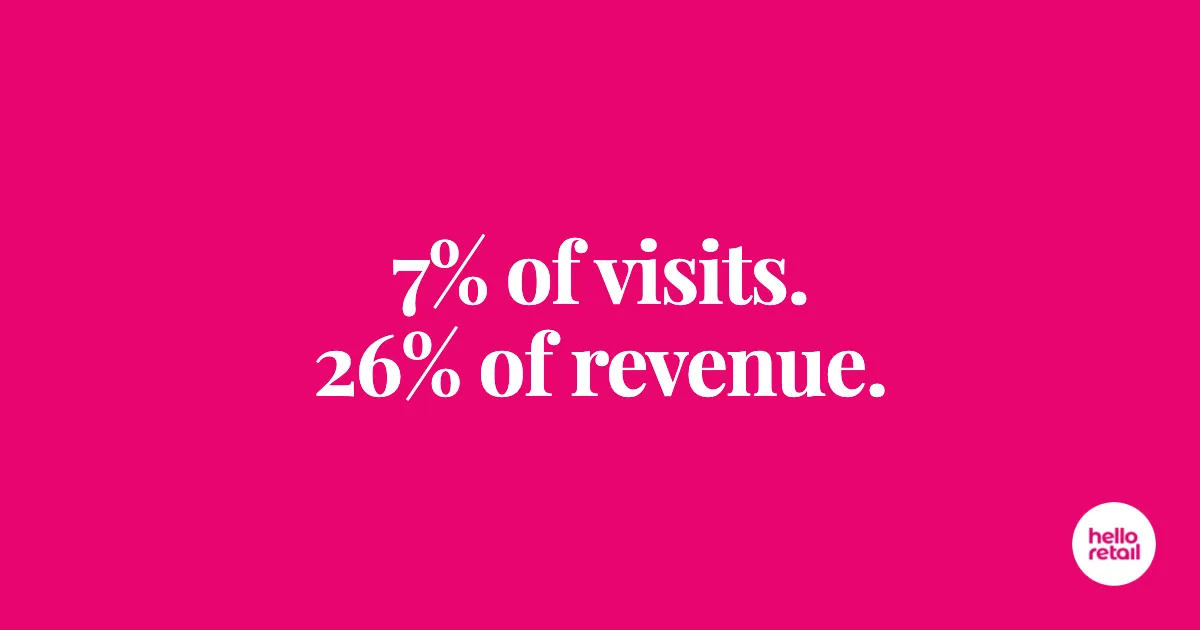
Shoppers who click a recommendation convert 4.6x more often and account for 26% of revenue from just 7% of visits (Salesforce). The full 2026 dataset on why recommendations drive ecommerce growth.
 Product Recommendations
Personalization strategies for SMB ecommerce
You don't need enterprise budgets to personalize effectively. Here are the personalization strategies that work for small and mid-market ecommerce stores.