Life Extension Europe: Reorder emails, timed to each customer
Customer Success In Numbers
The standard replenishment reminder fires a fixed number of days after every order, so it reaches most people at the wrong moment. The Replenishment Agent from Hello Retail times each reminder to the product’s real refill cycle, and to the individual customer, reaching around 50% open rates with almost no upkeep.
At a glance
| The problem | The usual fixed time-delay reminder fires the same number of days after every order, so it reaches most customers at the wrong moment and repeat buyers see the same email again and again. |
| The fix | The Replenishment Agent times the reminder to each product’s real refill cycle, then learns the customer’s own pattern, so it works even for first-time buyers with no history. |
| The result | Around a 50% open rate and a 6% click rate in the first two months, plus recurring revenue that was leaking before, with almost no upkeep. |
About Life Extension Europe
Life Extension Europe sells premium supplements and vitamins online, from basics like vitamin D and magnesium to advanced formulas.
Their customers are very different from one another. Some are in their 60s and have bought the same four supplements from Life Extension for 30 years. Others are in their 30s and 40s, newer to supplementation and getting into the more detailed side of it. A single generic email was never going to land the same way with both groups.
The usual time-delay reminder reaches customers at the wrong moment
Supplement customers reorder on a cycle, so the reorder is yours to win. The hard part is timing: send the reminder at the wrong moment and it does nothing.
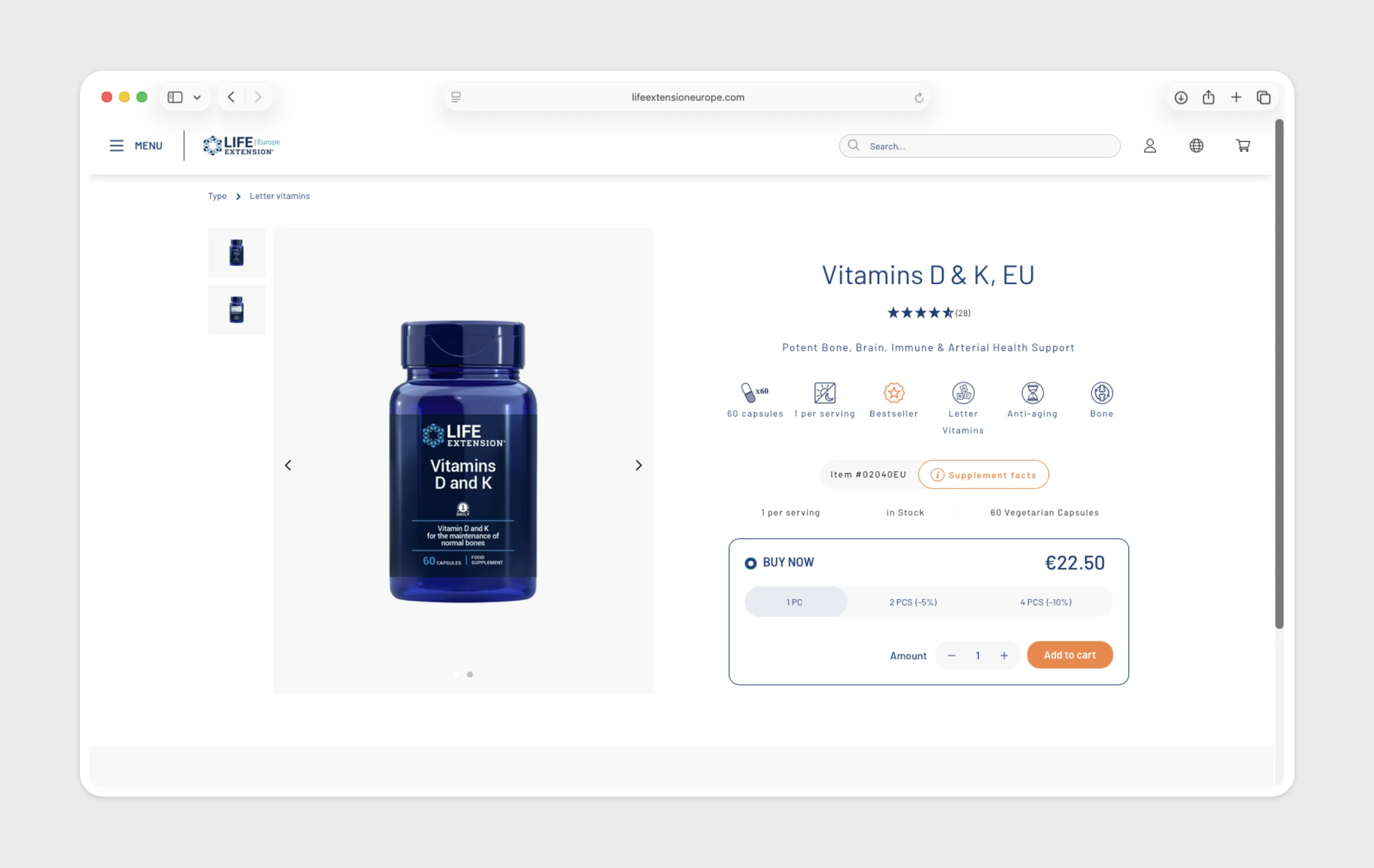
Most shops handle this the same way, with a post-purchase flow that fires a set number of days after the order. It seems reasonable until you remember that package sizes and how quickly people get through them vary a lot. Take a single product:
- A bottle of vitamin D has 60 capsules.
- One customer gets through it in 60 days.
- A slower or more forgetful one takes 100 days.
- A reminder sent at day 40 is no use to either of them.
You can try to patch this with more segments and conditional splits, but it never quite matches each person’s real cycle. And repeat buyers end up seeing the same reminder again and again, often at the wrong time, which is the surest way to get them to stop opening your emails. Mathilde, Life Extension’s CRM and Loyalty Manager, had run into this herself.
“I’ve previously worked a bit with personalization and logic-based emails, trying to show slightly different types of content to different types of customers. But with a product like ours, where customers often purchase again and again, they quickly start seeing that they’re getting the exact same email reminder repeatedly in their inbox. And sometimes they’re getting them at the completely wrong time.”
The agent times each reminder to the product cycle, and to the customer, automatically
Purchase history alone only gets you the returning customers. Plenty of buyers are on their very first order, so there’s no cycle to read from them yet.
So the agent starts from the product’s refill cycle, like how long a 60-capsule bottle tends to last. That’s enough to time a first reminder well, even when there’s no history to go on. Then, as the customer reorders, the agent picks up their individual pattern and the timing gets sharper. Product knowledge gets it right from the first order, and the customer’s own behaviour refines it from there.
The result is a reminder timed to the product and the person, with no fixed delay and no guesswork.
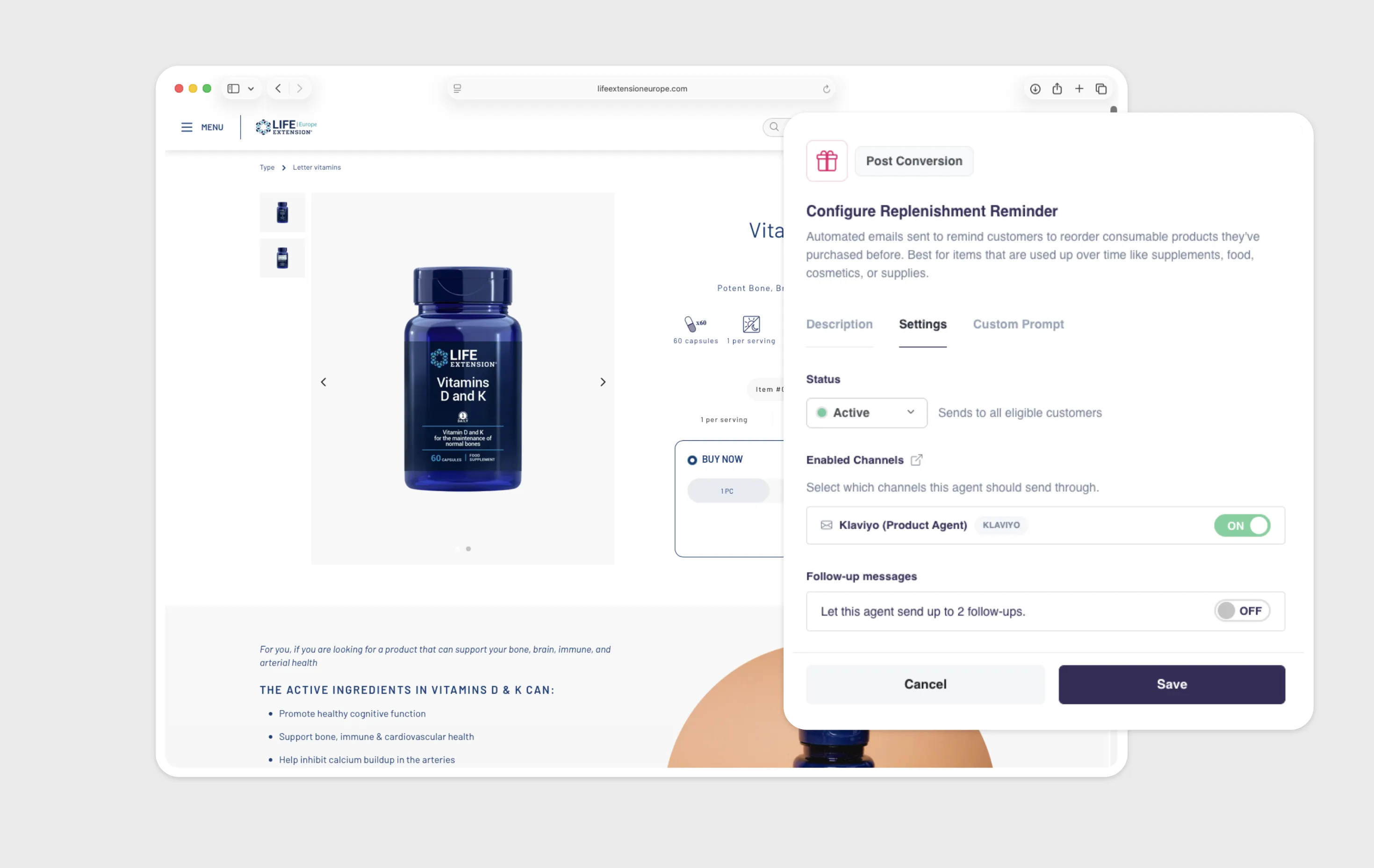
It works on top of your existing email setup instead of replacing it. Mathilde built her templates in Klaviyo once, and the agents have run on their own ever since: no new flows to build, no segments to maintain, nothing to keep an eye on.
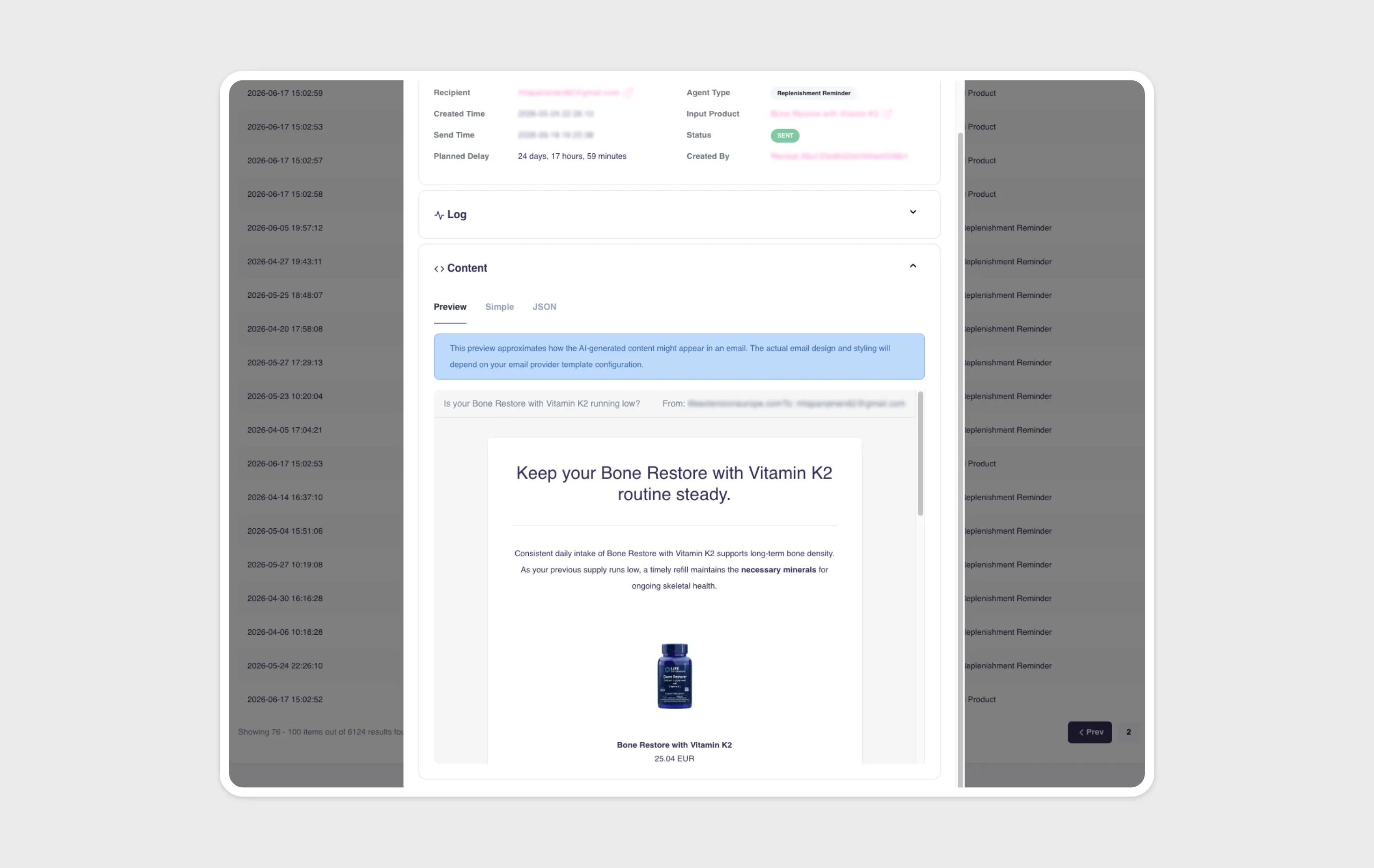
Good to know: What’s under the hood
The Replenishment Agent runs on Product Intelligence, Hello Retail’s proprietary AI that, alongside other models, powers Product Agents. It’s what gives the agent its read on each product’s refill cycle, and why it can time reminders even for customers with no purchase history yet.
The results
First two months live:
| Metric | Result | What it tells you |
|---|---|---|
| Open rate | ~50% | The reminders are landing at a moment customers actually care about. |
| Click rate | ~6% | People aren’t just opening the emails, they’re acting on them. |
| Operational load | Near zero | Three agents live, and after the initial Klaviyo setup there’s no flow or segment upkeep. |
“Once I had set up templates in Klaviyo, the product agents have been almost entirely self-sufficient. They’re just running in the background, bringing in solid, quiet revenue that we would have lost otherwise. It feels eerily well-timed for the customer, in a good way, where it’s convenient for them.”
See what Product Agents could do for your shop
If your customers buy on a cycle, the Replenishment Agent reaches them right when they’re ready to reorder, with no fixed delays and no flows to maintain.
Book a demoProducts featured: Product Agents, including the Replenishment Agent.