
Introducing Product Agents: a new, agentic approach to lifecycle marketing
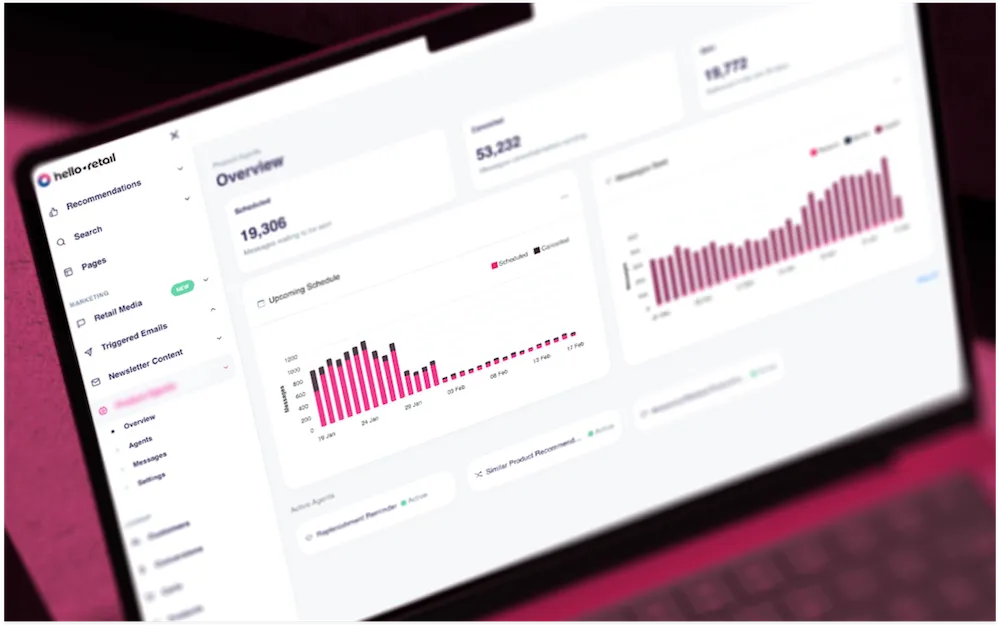
You have email flows. You have segments. You have Klaviyo doing the heavy lifting on delivery. And for many stores, that setup works well.
The challenge usually isn’t sending emails. It’s deciding which emails should exist in the first place, and when they should actually go out, especially when you have hundreds or thousands of products behaving differently.
That’s the gap Product Agents are designed to fill.
They integrate into your Klaviyo account, and act as an engine that understands products at a level humans and rules simply can’t manage at scale. This approach is what we call Agentic Commerce.
A few terms we use:
- Product Agents — Always-on AI agents that decide when and what message to send based on individual product behavior.
- Agentic Commerce — An approach where autonomous agents handle ecommerce decisions that are too detailed to manage manually.
- Product Intelligence AI — Hello Retail’s AI that understands product lifecycles and relationships by processing the product feed, without needing historical data.
- Replenishment products — Products that are used up and bought again over time.
- Product lifecycle — How a product is typically bought, used, and replaced.
- Product relationships — How products connect to each other, such as alternatives or compatible add-ons.
- Customer intent — Signals that indicate what a customer is likely trying to do.
- ESP (Email Service Provider) — The system used to send emails and manage templates and permissions.
- SKU — A unique identifier for a specific product, used here to describe product-level decision-making.
Why timing is harder than it looks
Flows work by applying rules. If someone does X, wait Y days, then send Z.
That works well when products behave similarly. It starts to break down when they don’t.
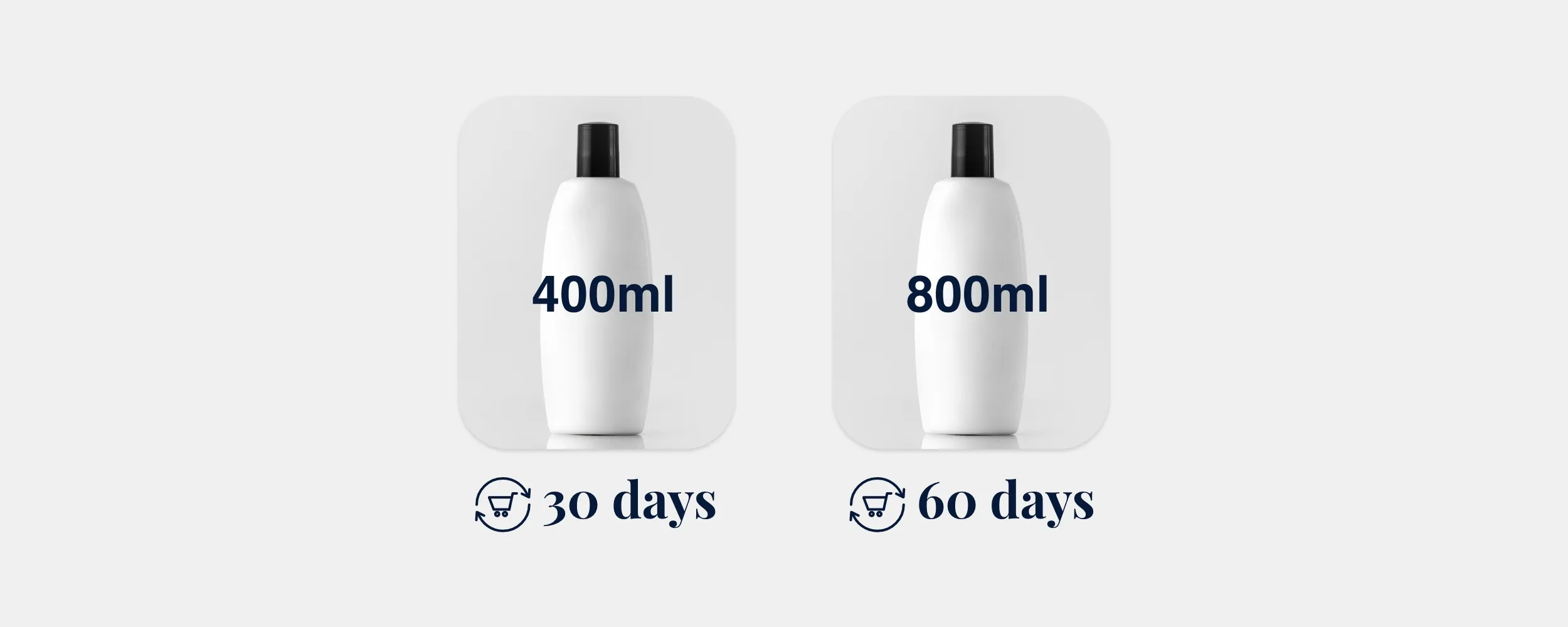
In many stores, products vary a lot. A bottle of shampoo and a jar of face cream might sit in the same category, but they’re used very differently. Even different sizes of the same product can last for very different lengths of time. On top of that, inventories change constantly, which makes it hard to keep product-specific logic up to date inside flows.
When everything is treated the same, messages often end up feeling early, late, or simply off.
Product Agents start from the product, not the flow. They ask a simpler question: Does this product create a good reason to contact this customer right now?
If the answer is no, nothing happens. If the answer is yes, the Agent schedules the message.
What Product Agents actually do
Product Agents always monitor changes and watch for signals like product views, order placements, price drops etc.
When one of these happens, the Agent looks at the specific product involved. It considers how that product is usually used, whether the customer has shown intent, and whether there is something useful to say.
If circumstances change before the message is sent, for example if the customer buys again, the message is canceled.
Messages are sent through your existing email setup, using your templates and permissions.
Product Agents in practice
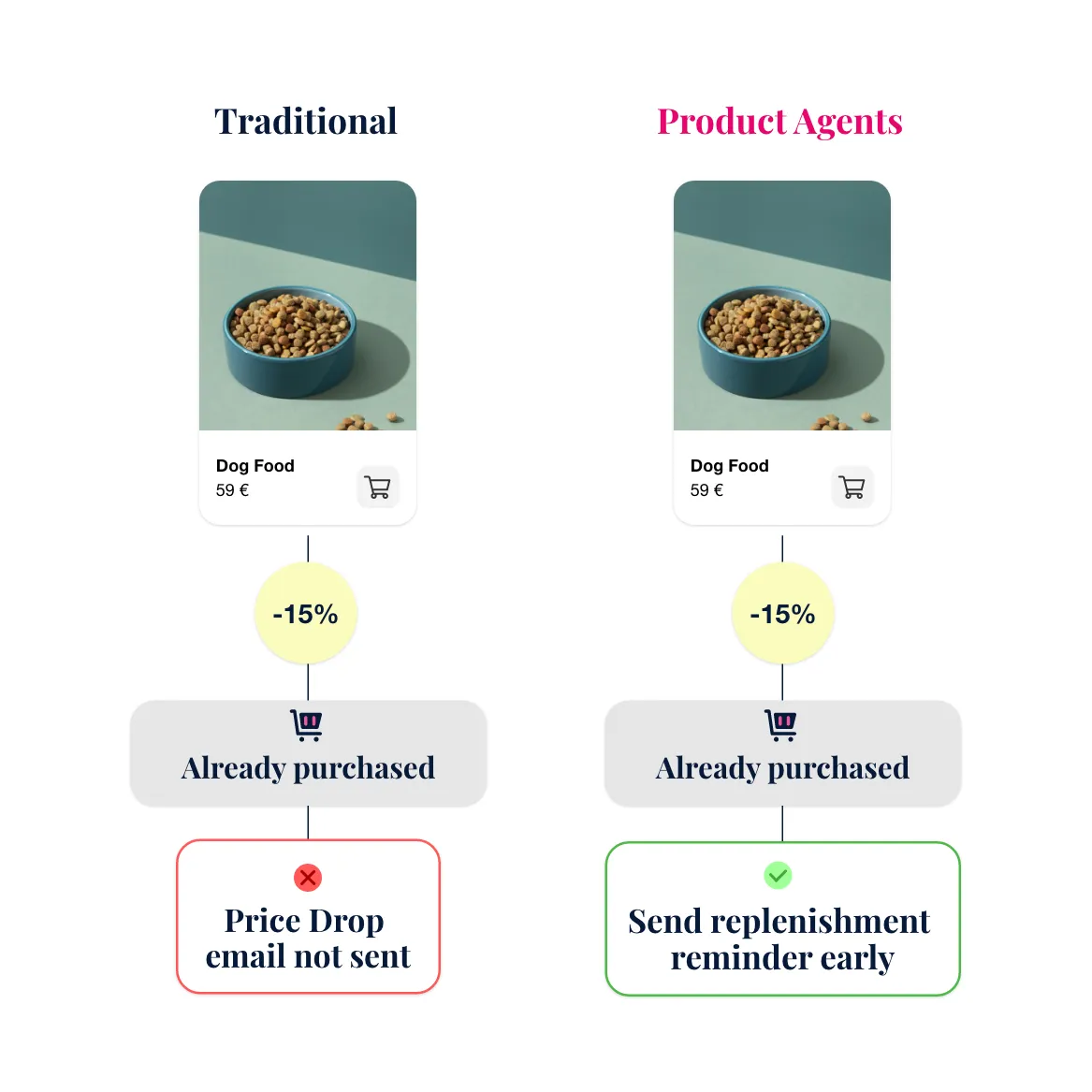
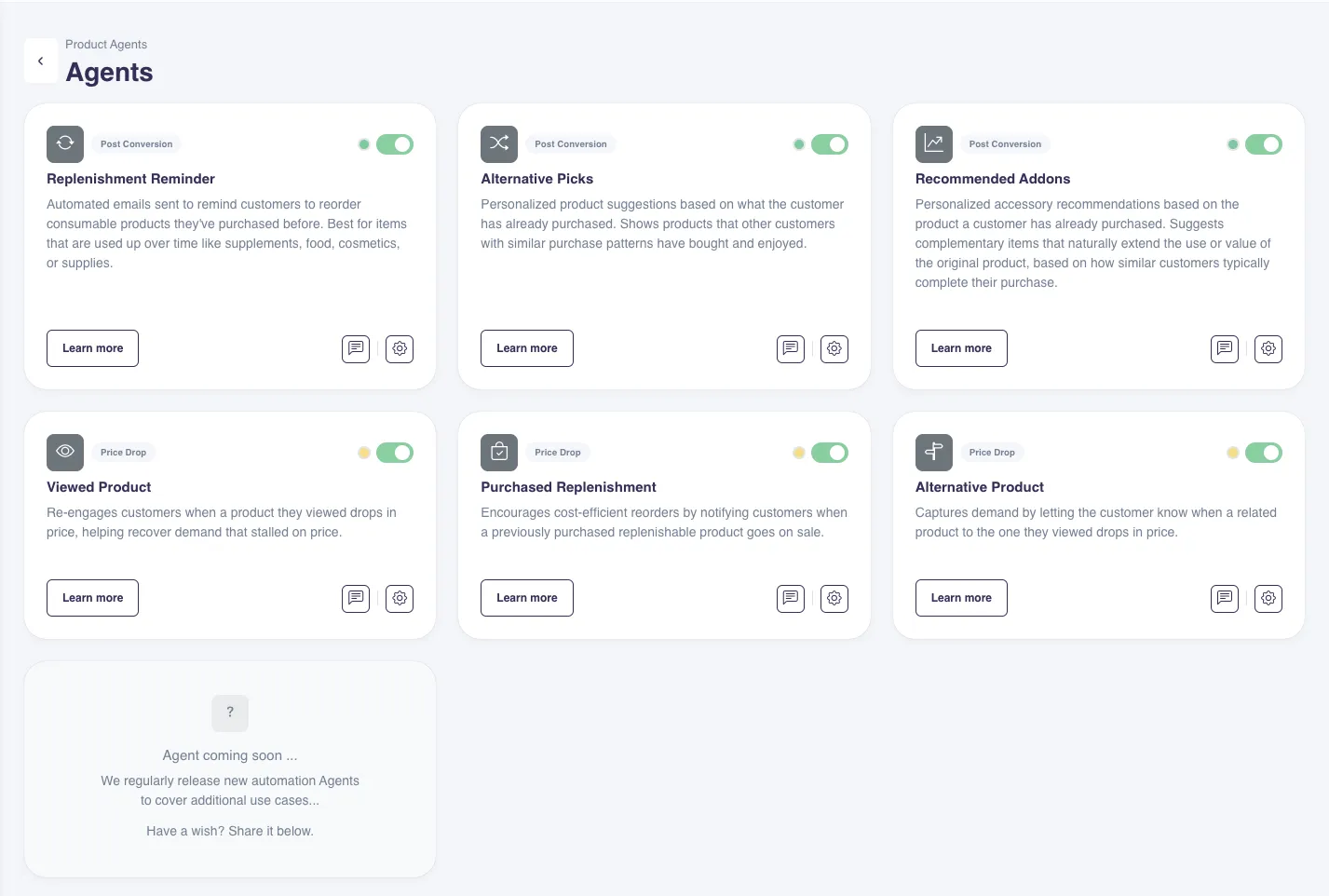
The first batch of Product Agents, released in February 2026, fall into two broad categories: Price Drop and Post-Conversion.
More Agents are in development, to cover more use cases.
Price Drop Agents
Focus on moments where a price change creates new interest. They connect real price drops with customers who have already shown intent. Includes:
- Price Drop Agent for viewed products
- Price Drop Agent for replenishment products
- Price Drop Agent for alternative products
1. Price Drop Agent for viewed products
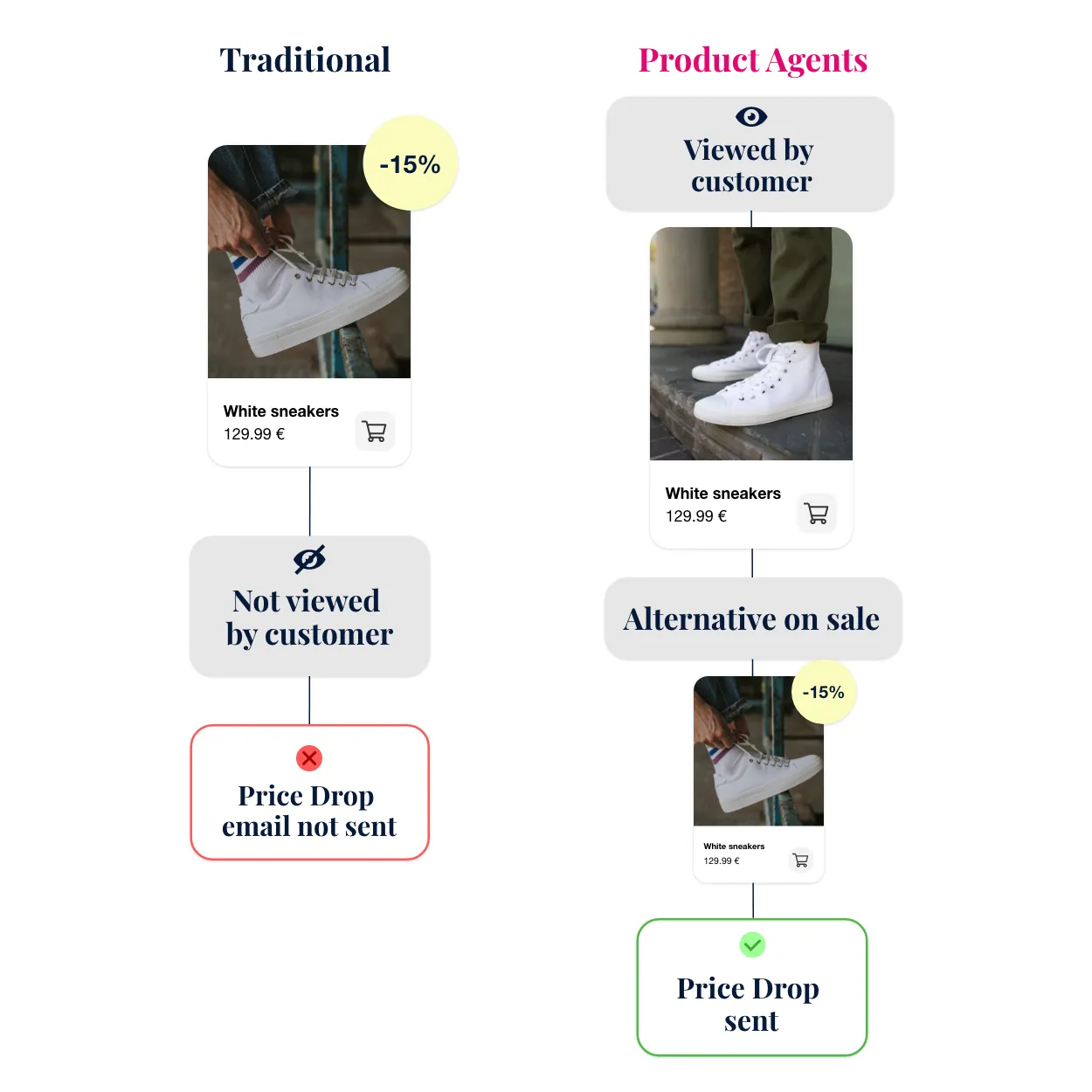
This Agent follows up when a product someone viewed becomes cheaper.
It only triggers on real price drops and only for customers who looked at the product without buying.
Without automation, many price changes never turn into customer communication. Popular platforms like Shopify, WooCommerce or BigCommerce offer a price drop trigger for Klaviyo. However if you are using other platforms that don’t offer this, The Price Drop Agent can solve this for you.
This Agent is especially useful if:
- Price plays a role in the buying decision
- You have a large or frequently changing catalog
2. Price Drop Agent for replenishment products
This Agent looks for price drops on products customers tend to buy again.
Because Product Agents understand products, they know which items are typically replenished and which are not. You don’t need to tag products or build rules for this. The Product Intelligence model figures it out automatically from the product data.
When a replenishment product becomes cheaper around the time a customer is likely to need it again, the Agent sends a message pointing out the lower price.
This is especially useful for stores with a mixed assortment of replenishment and one-off products, where treating everything the same would create noise.
This is a good fit if:
- Customers buy the same products repeatedly
- Price influences when they reorder
- You want to reward returning customers without discounting everything
3. Price Drop Agent for alternative products
Sometimes the product a customer looked at never goes on sale. A similar product might.
This Agent watches related products and steps in when a good alternative becomes cheaper. The original product does not need to change price.
Instead of letting interest fade, the Agent keeps the conversation going at category level.
This Agent is most useful when:
- Customers compare options before buying
- Products within a category are interchangeable
- Price differences influence the final decision
Post-Conversion Agents
Focus on what happens after a customer buys. They support repeat purchases and relevant follow-ups. Includes:
- Replenishment Reminder Agent
- Similar Product Recommendation Agent
- Recommended Add-ons Agent
1. Replenishment Reminder Agent
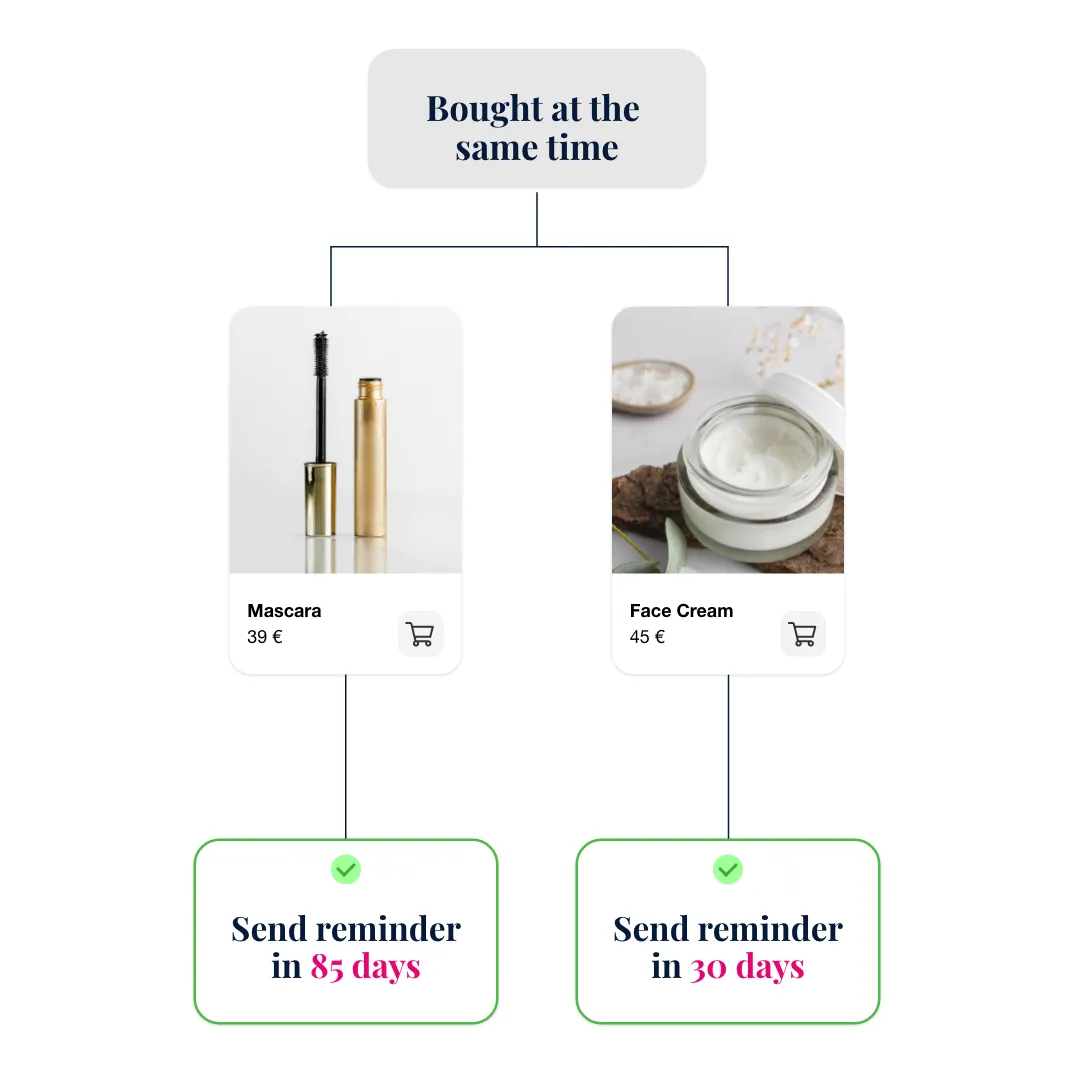
This Agent sends a reminder when a customer is likely running low on a product.
After a purchase, it estimates how long that product usually lasts and schedules the reminder accordingly. If the customer buys again before that point, the reminder is canceled.
The main difference from traditional replenishment flows is that timing is based on the product itself, not a fixed delay applied to a whole category.
This Agent is for you if:
- You sell consumables that people regularly run out of
- Repeat purchases matter for your revenue
2. Similar Product Recommendation Agent
This Agent helps customers compare products when they are still deciding.
After a product view or purchase, it recommends similar items, excluding products the customer already owns.
It works well for large assortments and browsing-heavy categories.
This Agent is for you if:
- Customers browse multiple products before choosing
- You sell many similar items within a category
- Comparison is a natural part of the buying process
3. Recommended Add-ons Agent
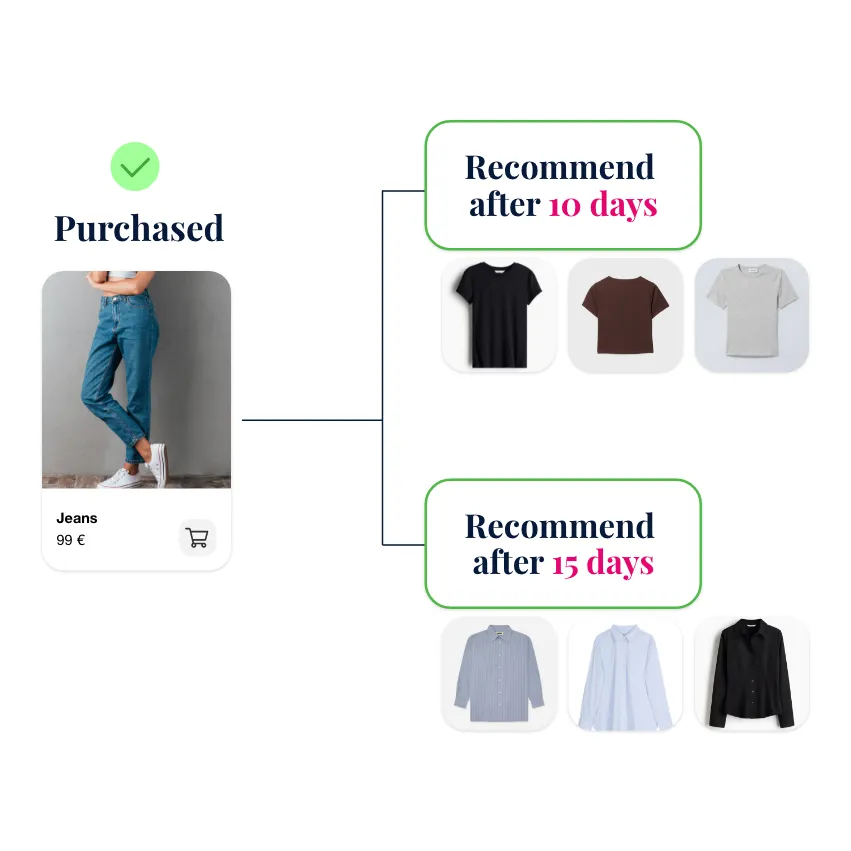
This Agent suggests accessories or related products after a purchase, but not immediately.
It waits until the add-on is likely to be useful, based on the product and its typical lifecycle.
Treating add-ons as a follow-up decision, rather than a checkout tactic, tends to produce better engagement over time.
This Agent is for you if:
- Your products have natural extensions or accessories
- Average order value is high enough to support follow-up purchases
- Immediate post-purchase upsells feel too aggressive
How each email is put together
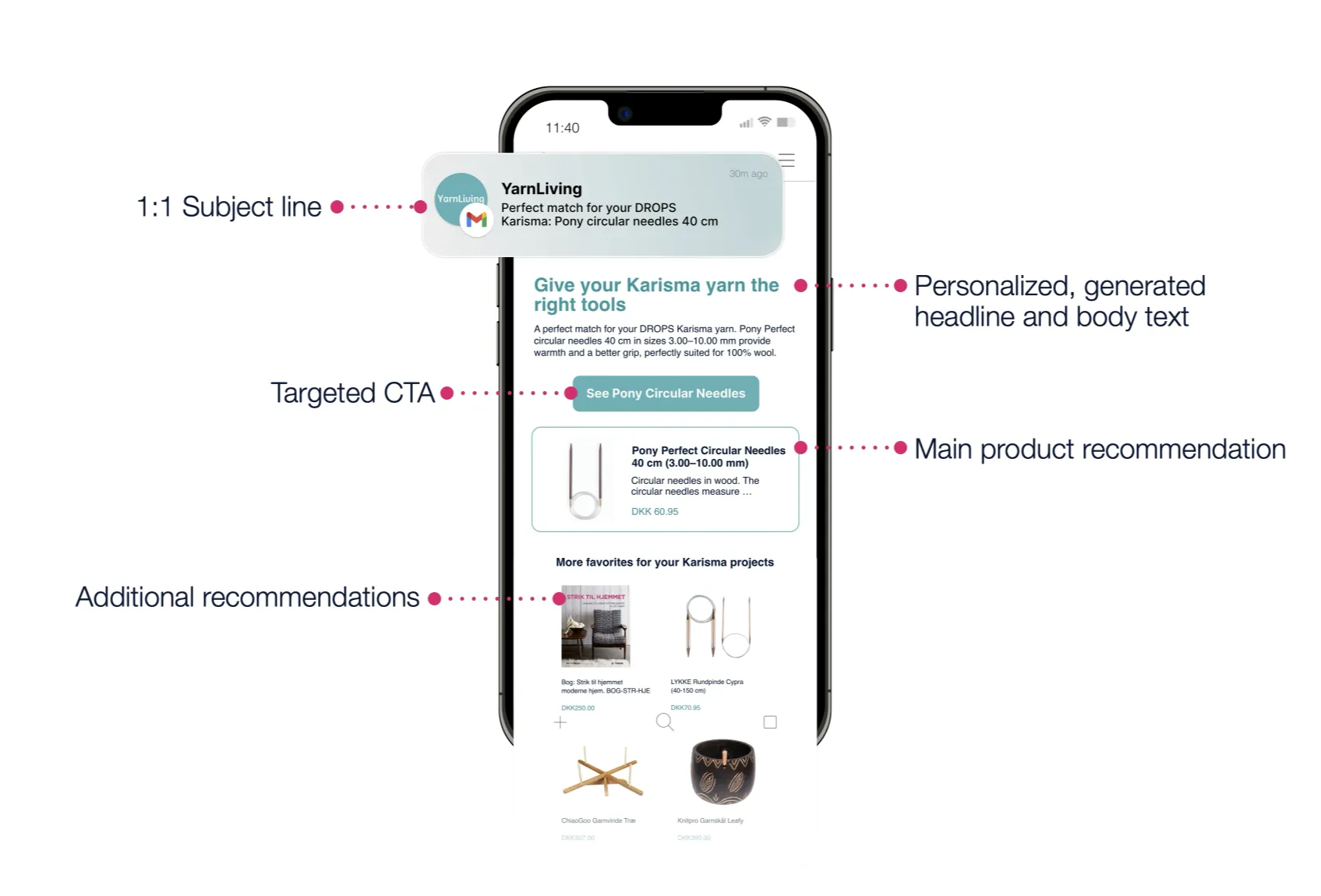
When Product Agents decide to send a message, the email is built specifically for that person and that moment. The Agent already knows why it’s reaching out, for example a refill coming up or a price change. That context shapes the entire email.
- Subject line — Written for the individual recipient, based on the product and situation.
- Message text — Explains the reason for the email, matched to the timing and product, and uses the tone of voice you selected.
- Main product — The product the Agent has decided is most relevant to recommend right now.
- Call to action — A clear next step that leads directly to the product, not a generic landing page.
- Additional products — Included when they support the main recommendation.
All of this runs through Klaviyo, branding, templates, and permissions stay the same. The Agent fills in the product, context, and message for each recipient. The result is emails that feel specific and timely, without manual segmentation or complex flows.
If you’re already investing in lifecycle marketing, Product Agents are a practical way to make that work harder, without rethinking your entire setup. Full details and pricing are available on the Product Agents page.