
Why product data is the most underused asset in retail
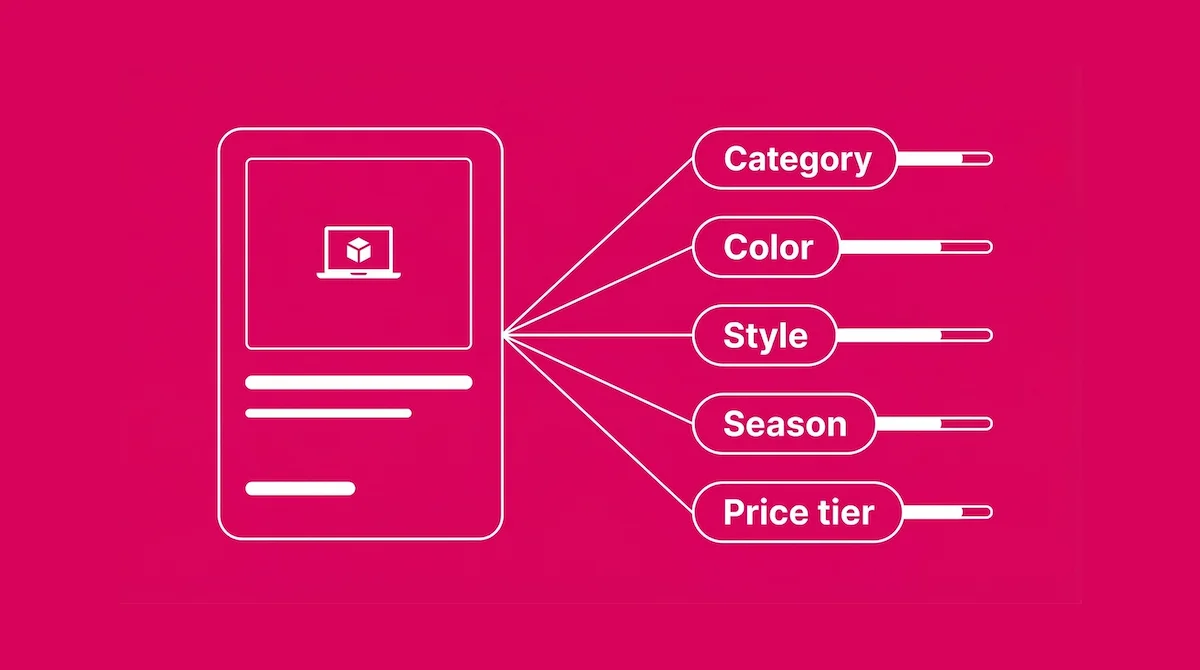
Why product data is the most underused asset in retail
You know the color, size, price, and category of every product in your catalog. You probably have descriptions, images, weight, and material information too.
Now ask yourself: what are you doing with all of that beyond putting it on a product page?
For most retailers, the answer is surprisingly little. Product data sits in a PIM or ERP system, gets pushed to the website, and that’s where its journey ends. The richest dataset in your business is treated as a publishing requirement rather than a strategic asset.
The gap between having data and using it
There’s a fundamental difference between storing product data and understanding it.
Storing data means knowing that SKU-4829 is a “Blue Cotton T-Shirt, Size M, $29.99.” Understanding it means knowing that this product appeals to a specific customer segment, performs best when displayed alongside slim-fit jeans, sees higher conversion rates in spring, and competes with three similar products in your catalog that cannibalize each other’s sales.
Most ecommerce platforms give you the first part for free. The second part — actual product intelligence — requires connecting product attributes to behavioral data at scale.
This is where the opportunity lives. Retailers who treat product data as an intelligence asset make better decisions about merchandising, recommendations, pricing, and inventory. Retailers who treat it as catalog infrastructure leave money on the table.
What product intelligence actually looks like
Product relationships that go beyond categories
Your category taxonomy says “t-shirts” and “polo shirts” are both in “Men’s Tops.” That’s useful for navigation. It’s nearly useless for personalization.
Product intelligence reveals that a specific blue cotton t-shirt has a strong affinity with a particular pair of gray chinos and a navy canvas belt — not because a merchandiser decided so, but because purchase data across thousands of transactions reveals the pattern. These relationships exist at the individual product level, and they shift over time.
Understanding these relationships is the foundation of smart product recommendations. The difference between “You might also like” suggestions that feel random and ones that feel psychic comes down to the quality of product relationship data.
Product clustering
Not all products in a category are interchangeable. Within “running shoes,” there are trail runners, road runners, speed shoes, and stability shoes. Within each of those, there are budget, mid-range, and premium tiers. And within each tier, there are style differences that appeal to different customer segments.
Product clustering uses attributes and behavioral signals to group products by how customers actually perceive them — not how your merchandising team organizes them. This distinction matters because customers don’t shop by category. They shop by need, occasion, and preference.
When your system understands product clusters, it can make smarter substitution recommendations (“this product is out of stock, but here’s the closest match”), better cross-sell suggestions, and more nuanced search results.
The business impact
When product data becomes product intelligence, the effects compound across channels.
Search gets smarter. Instead of matching keywords to product titles, search can understand synonyms, related concepts, and semantic meaning. A customer searching for “warm winter coat” gets results ranked by actual warmth ratings and customer reviews mentioning warmth — not just products with “warm” in the title.
Recommendations get relevant. Instead of “frequently bought together” rules based on co-purchase counts, recommendations reflect genuine product relationships. The difference is subtle in description but significant in conversion rates.
Email gets personal. Triggered emails can feature products that genuinely complement what the customer just bought, based on product-level understanding rather than category proximity.
Merchandising gets data-driven. Product placement, homepage curation, and promotional selection can all be informed by product performance data rather than gut feeling.
Starting with what you have
You don’t need to rebuild your entire data infrastructure to start extracting more value from product data. Start with these steps:
-
Audit your product attributes. How complete and consistent is your data? Missing attributes limit what any intelligence system can do. Focus on the attributes that matter most for your category: materials for fashion, specifications for electronics, ingredients for food and beauty.
-
Connect product data to behavioral data. Which products get viewed but not purchased? Which products get added to cart but abandoned? Which products drive repeat purchases? These behavioral signals turn static product data into dynamic intelligence.
-
Look for cannibalization. If you have similar products competing for the same search queries and recommendation slots, you’re splitting your own traffic. Product clustering helps identify cannibalization and inform assortment decisions.
-
Track product lifecycle indicators. Monitor how individual products move through their lifecycle: launch phase, growth, maturity, decline. This informs everything from pricing strategy to when to introduce replacement products.
How this connects to Hello Retail
Hello Retail’s Product Intelligence platform is designed around the idea that product data should be a living asset, not a static catalog. It connects product attributes with behavioral signals from across the Hello Retail network to build granular product-level understanding.
This intelligence feeds into every touchpoint — search, recommendations, and email — so the same product understanding informs the entire customer experience. For retailers, this means a single product data investment creates compounding value across channels.
Key takeaways
- Most retailers store product data but don’t use it for intelligence — the gap between having data and understanding it represents a major competitive opportunity
- Product relationships at the individual SKU level, not the category level, drive the most effective personalization
- Product clustering reveals how customers actually perceive your catalog, which is different from how your team organizes it
- The value of product intelligence compounds across search, recommendations, email, and merchandising — it’s not a single-channel investment