
Shopify B2B is on every plan. What about personalization?
Shopify B2B used to come with a Plus-sized price tag. In April, that changed: B2B features are now available on every Shopify plan. Suddenly the question isn't "can we afford Shopify Plus for wholesale?" It's "which apps do we layer on top of native B2B to actually run the business?"
If you're searching for the best Shopify wholesale app, you're really asking a personalization question. This guide walks through three places where personalization meaningfully extends what Shopify B2B does out of the box - on-site, in email, and across customer groups.
What actually changed with Shopify B2B
Until recently, the serious B2B features - company accounts, price lists, payment terms, customer-specific catalogs - were gated behind Shopify Plus. Merchants on Basic, Grow, or Advanced had to simulate wholesale with tags, parallel stores, or third-party apps that bent consumer tooling into B2B shapes.
That ceiling's gone. Native B2B is now plan-agnostic, which means a whole segment of mid-market and SMB merchants can run wholesale directly on Shopify without a seven-figure contract. The apps you bolt on top have to be chosen with that reality in mind.
Three places where personalization can enhance Shopify B2B
If you're already running on Shopify B2B, the native features cover the structural side of wholesale - the stuff that makes a B2B store technically work. The part that drives repeat revenue is different: making the buying experience feel personal and keeping reorders flowing. That's the gap a personalization layer fills.
Three common areas to enhance, each solving a different problem:
- On-site personalization. Recommendations and search that adapt to who's actually browsing - their history, the brands they reorder, the price tier they tend to buy at. This is where most B2B merchants underinvest because they assume wholesale buyers already know what they want. Data says otherwise.
- Replenishment and reorder communication. Automated email that nudges buyers to reorder at the right moment. This is the high-ROI area most B2B merchants underuse and the one most frequently ignored.
- Merchandising by customer group. Showing different buyers different homepages, category views, and featured products. Native Shopify handles some of this; a personalization layer handles the rest.
The apps worth shortlisting are the ones that work with your plan tier, not against it. A lot of established B2B apps still assume Plus, and you don't need to pay for that assumption anymore.
Why personalization matters more in B2B than most merchants think
The B2B buyer pool is smaller than retail. Repeat rates are higher. That combination means every returning buyer session is worth more than a cold retail visit, and the cost of treating them like strangers is higher.
Returning buyers drive wholesale traffic
Hello Retail's AI engine "recognizes and understands product correlations and enriches them with behavioral intelligence" to produce recommendations that match each buyer's history. That's the same engine at work whether you're running a consumer site or a wholesale store. The behaviors you're learning from are different (bulk reorder patterns rather than impulse browsing), but the mechanics hold.
Real numbers from the Hello Retail product pages: a 55% reduction in bounce rate and 76% better conversion when recommendations match what a buyer is likely to act on. In B2B, where a single returning customer can represent a recurring five- or six-figure account, that kind of lift isn't decorative.
See how product recommendations work on Hello RetailPrice affinity cuts both ways in wholesale
Consumer personalization often frames price-awareness as showing discounts to bargain shoppers. In B2B it's richer: high-volume buyers want premium or bulk-tier shortcuts; new accounts want entry-tier SKUs to test with. Hello Retail's search can "show premium products to customers ready to spend more, or surface the best deals for buyers looking for a bargain," automatically, without manual tagging.
Search that respects brand loyalty and trade vocabulary
Wholesale buyers search differently. They type SKUs, part numbers, and brand names, not casual product descriptions. A search bar that choked on "HRT-0421-BLK" is a search bar costing you orders.
Hello Retail's search does three things that matter in B2B:
- Brand and style preference learning from browsing behavior. If a buyer keeps reordering from the same three brands, search results reflect that without you writing a single rule.
- Built-in typo tolerance and misspelling correction, plus synonym handling. SKU typos and part-number variants stop being dead-ends.
- Initial Content suggestions that appear the moment a buyer clicks the search field, before they type. For repeat wholesale buyers, that's often the fastest path to their usual order.
If you're switching to Shopify from an older B2B platform, your buyers already know what they want. The friction isn't discovery - it's making sure their existing search habits keep working on day one. That's a personalization problem, not a catalog problem.
Replenishment reminders: The high-ROI B2B email
Wholesale demand is often predictable. Restaurants reorder wine. Salons reorder hair color. Builders reorder fasteners. The pattern is there in your data; the question is whether anything acts on it.
Hello Retail's Product Agents include a Replenishment Reminder agent that "trigger reminders based on real product usage, not averages." That phrase matters in B2B because averages miss what you actually want to see: that one account buys weekly, another monthly, another only when a specific SKU dips below a threshold.
This is especially relevant if your B2B store runs on Shopify with Klaviyo for email. Product Agents trigger inside your existing Klaviyo flows and read directly from Shopify's customer groups, so there's no email migration and no separate tool to learn - the agents just sit on top of the stack you already have.
Across all merchants running the agents, the benchmark is 6x revenue per email compared to rule-based Klaviyo flows. Of the three areas to enhance, replenishment is the one most likely to pay for the others.
For a deeper look at the email side, see our guide on how to improve Klaviyo email performance.
Switching to Shopify for B2B: Questions to ask before you replatform
A replatform is the rare moment where you can audit personalization honestly, without the sunk-cost reflex. Before you carry your old setup over, work through the questions below. The answers tell you what's worth porting, what's worth replacing, and where the post-launch gains are hiding.
What does your current site search actually learn from B2B buyer behavior? Legacy search often ranks by relevance score alone - no brand or style affinity, no SKU-aware typo tolerance, no learning from repeat-buyer patterns. If yours is in that category, the migration is the cleanest moment to upgrade rather than port.
How does your recommendation engine treat returning accounts compared to new ones? Many B2B sites treat every visitor the same because the recommendation engines they bought were built for one-off consumers, not buyers with weekly reorder cadences. Wholesale traffic skews heavily toward returning accounts, and personalization that ignores that pattern leaves the easiest revenue on the table.
Are your existing email triggers rule-based or behavior-based? Fixed rules ("send a reminder 30 days after purchase") miss the variance B2B buyers create - some accounts reorder weekly, others quarterly, others only when a specific SKU dips below a threshold. Audit what's actually firing today and ask whether the trigger logic deserves to come along.
Where does personalization fail in your B2B store today? Where do buyers complain that search can't find parts? Where do sales reps redo recommendations manually because the site won't? Where do reorders quietly leak to a phone call or an email? Those gaps are the right priorities for day-one investment on Shopify, and they're usually cheaper to fix than to keep working around.
Key takeaways
- Personalization is higher-leverage in B2B than retail because buyer pools are smaller and repeat rates are higher.
- Replenishment email is the high-ROI lever most B2B merchants underuse. Measure it first, optimize it second.
- Pick apps that work with your plan tier, not against it. A lot of incumbent B2B apps still assume Shopify Plus, and you don't need to pay for that assumption anymore.
Keep reading
 Solutions
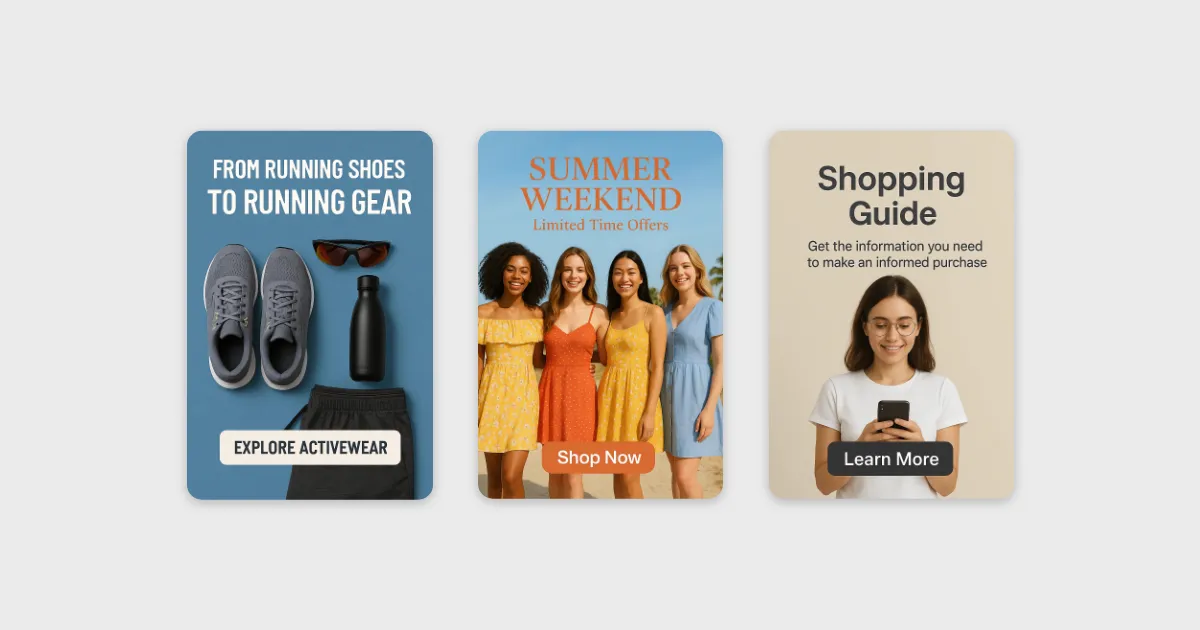
 Banner creation demo: Building retail media campaigns with the inspiration catalog
Hello Retail's Retail Media banner creator builds and launches on-site campaigns in minutes, with AI imagery, multi-size output, and an inspiration catalog of ready-made use cases.
 Solutions
 AI landscape and Product Intelligence: How Hello Retail builds its personalization foundation
Hello Retail's Product Intelligence is a proprietary AI model built over five years that combines text and image signals to underpin personalized search and recommendations.