
Why enterprise personalization platforms cost more than they should
Why enterprise personalization platforms cost more than they should
If you run an ecommerce operation somewhere between startup and Fortune 500, you’ve probably been on the receiving end of a pitch from an enterprise personalization vendor. The demos are impressive. The client logos are recognizable. The promise is compelling: one platform to handle search, recommendations, email, content, and everything in between.
Then you see the price tag.
Enterprise personalization suites can cost anywhere from six figures to well into seven figures annually. For the largest retailers in the world, that investment might make sense. But for a mid-market ecommerce team doing strong revenue and looking to grow, the math often doesn’t work — not because personalization isn’t valuable, but because you’re paying for things you’ll never use.
This is the enterprise tax on personalization, and it’s worth understanding before you sign.
Why enterprise platforms are appealing
Let’s start with what makes these platforms attractive, because the appeal is real.
Enterprise personalization suites — sometimes called “commerce experience clouds” or “digital experience platforms” — promise a unified vision. One vendor, one contract, one platform that handles everything from product discovery to lifecycle marketing. They’ve been around for years, they have deep integrations with major enterprise systems, and they can point to deployments at some of the world’s best-known brands.
For a VP of Ecommerce evaluating options, this feels safe. No one ever got fired for choosing the established enterprise vendor. And when the sales team walks you through the full capabilities, it’s hard not to be impressed by the breadth.
The problem starts when you try to match that breadth to what your team actually needs.
The enterprise tax: what you’re really paying for
Enterprise personalization platforms are built for enterprise buyers. That sounds obvious, but the implications run deep.
These platforms are designed for organizations with dedicated personalization teams, internal data engineers, and the budget to hire systems integrators for multi-month implementations. The pricing reflects that reality. You’re not just paying for the software — you’re paying for a level of configurability, customization, and architectural flexibility that large enterprises require but mid-market teams rarely do.
Here’s what the enterprise tax typically includes:
Complexity you won’t use. Enterprise platforms offer deep customization because their largest customers demand it. But most mid-market ecommerce teams don’t need to build custom machine learning models or design bespoke data pipelines. They need intelligent defaults that work well out of the box, with the ability to fine-tune when they’re ready.
Professional services baked into the deal. Many enterprise contracts assume you’ll need paid onboarding, training sessions, and ongoing consulting. These costs are sometimes buried in the license fee and sometimes quoted separately, but either way, you’re paying for hand-holding that a well-designed platform shouldn’t require.
Infrastructure you’re subsidizing. Large commerce experience clouds maintain sprawling product portfolios — content management, customer data platforms, A/B testing engines, email automation, and more. Even if you only need personalized search and recommendations, your contract helps fund the development of products you’ll never log into.
Opaque pricing. Enterprise vendors rarely publish pricing. Quotes are custom, negotiation is expected, and it’s difficult to benchmark what you’re paying against what similar companies pay. This opacity benefits the vendor, not you.
The fragmentation problem
One of the most counterintuitive issues with enterprise personalization suites is that many of them aren’t actually unified platforms. They’re collections of products — often acquired through years of M&A — that have been bundled under a single brand.
In practice, this means you might be buying three or four separate products that were originally built by different companies, on different technology stacks, with different data models. The vendor’s marketing presents them as a seamless suite, but the reality on the ground is integration work.
Your team ends up stitching together a search product, a recommendations engine, and a marketing automation tool that don’t natively share data or user context. You need middleware, custom data flows, and sometimes entirely separate analytics dashboards for each module. The “single vendor” advantage starts to look a lot like managing multiple vendors wearing the same logo.
This fragmentation creates ongoing friction. Updates to one module can break integrations with another. Your support experience varies depending on which product team picks up the ticket. And the roadmap for each product moves at its own pace, with its own priorities.
Implementation reality
Let’s talk about what happens after you sign the contract.
Enterprise personalization platforms are not plug-and-play. Implementation timelines of three to six months are common, and projects stretching beyond that are not unusual. You’ll likely need a dedicated project manager — either internally or from the vendor’s professional services team — and the involvement of your development team for weeks or months.
The learning curve is steep. These platforms are powerful precisely because they expose so many levers, but that power comes at the cost of usability. Your merchandising team, the people who should be driving personalization strategy on a daily basis, often can’t use the platform without developer support. Every campaign, every rule change, every new recommendation strategy becomes a ticket in the development backlog.
This creates an uncomfortable dynamic. You bought the platform to empower your commercial team, but in practice, your commercial team is waiting on engineering to make changes. The bottleneck hasn’t been removed — it’s just been relocated.
The mid-market sweet spot
Here’s the thing: mid-market ecommerce teams don’t have lesser personalization needs. A retailer doing tens of millions in annual revenue needs search that actually works, recommendations that drive AOV, and email triggers that recover abandoned carts. These are the same capabilities that enterprise retailers need.
What mid-market teams don’t need is the operational overhead that enterprise platforms impose. They don’t need six-month implementations. They don’t need to hire systems integrators. They don’t need a platform that requires a dedicated team just to keep it running.
The mid-market sweet spot is enterprise-grade capabilities delivered without enterprise complexity. It’s a platform that a merchandiser can configure on their own, that goes live in weeks instead of quarters, and that prices based on the value it delivers rather than the complexity it contains.
What to look for instead
If you’re evaluating personalization platforms and you’re not a Fortune 500 retailer, here’s what matters most:
A truly unified platform. Not a bundle of acquisitions — a single product built on one data model, where search, recommendations, email, and advertising all share the same behavioral and product intelligence. When one module learns something about a shopper, every other module should benefit immediately.
Fast time to value. Look for platforms that integrate with your ecommerce system in days, not months. Pre-built connectors for Shopify, Magento, WooCommerce, Shopware, Prestashop, and similar platforms are a strong signal. If a vendor tells you implementation will take a quarter, ask why.
Merchandiser-first design. Your merchandising and ecommerce team should be able to create campaigns, adjust search rules, and configure recommendation strategies without filing a developer ticket. The platform should feel like a tool that empowers them, not one that constrains them.
Transparent pricing. You should know what you’re paying and why. Pricing that scales with your traffic or revenue is fair. Pricing that requires a three-week negotiation with an enterprise sales team is a red flag.
Responsive support. When something breaks or you need help, you should talk to someone who knows your account and your platform configuration. Support quality shouldn’t depend on which product module you’re asking about.
The right fit matters more than the biggest name
Choosing a personalization platform is a significant decision, and it’s tempting to default to the biggest name in the market. But bigger isn’t always better, especially when “bigger” means more complexity, more cost, and a slower path to results.
At Hello Retail, we built a unified personalization platform specifically for ecommerce teams that want enterprise capabilities without the enterprise tax. Search, recommendations, email, and ads run on a single engine, go live quickly, and are designed for merchandisers to use directly — no developer bottleneck required.
If you’re exploring your options, we’d love to show you how it works. Book a demo and see the difference a platform built for your scale can make.
Keep reading
 Industry Tips
 Enterprise personalization platforms: Real costs and what mid-market ecommerce actually needs
What you'll pay for enterprise personalization platforms, why mid-market teams rarely need the full stack, and the real cost drivers (modules, implementation, traffic) when evaluating whether enterprise-tier is the right fit for a 3-person team.
 Industry Tips
 When your personalization vendor gets acquired: A practical guide
Your ecommerce personalization vendor just merged with an enterprise platform. Here's what to evaluate, what to watch for, and when it makes sense to explore alternatives.
 Industry Tips
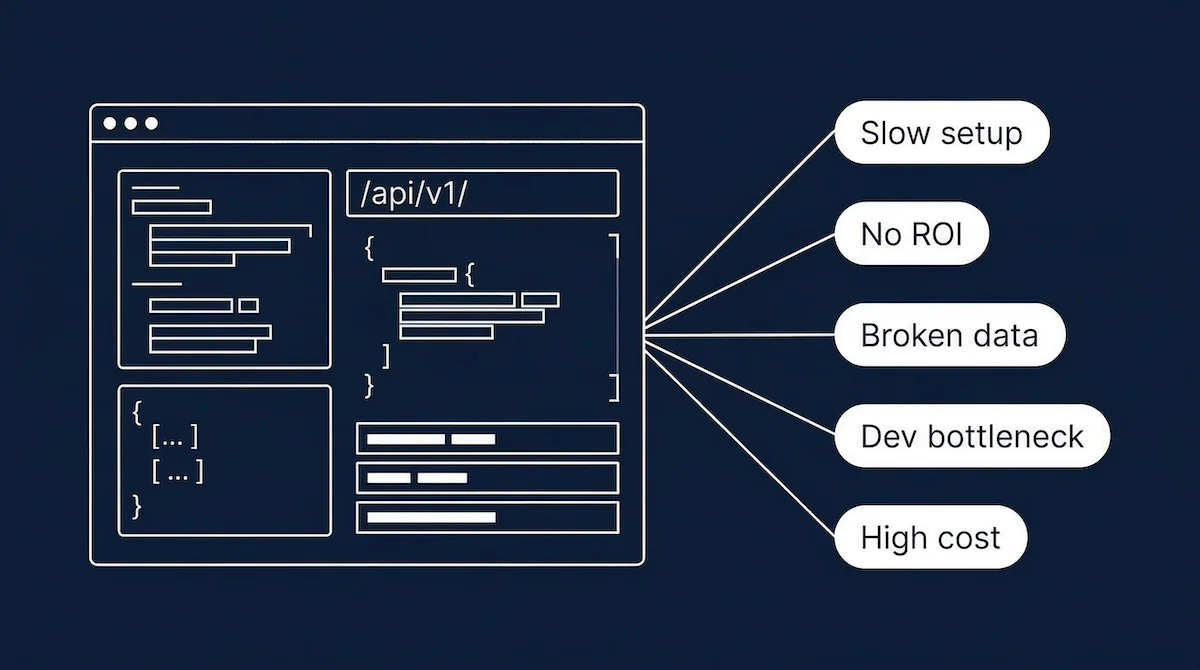
 5 signs your personalization platform is holding you back
Struggling with slow implementation, developer bottlenecks, or unclear ROI? Here are five signs it might be time to switch personalization platforms.